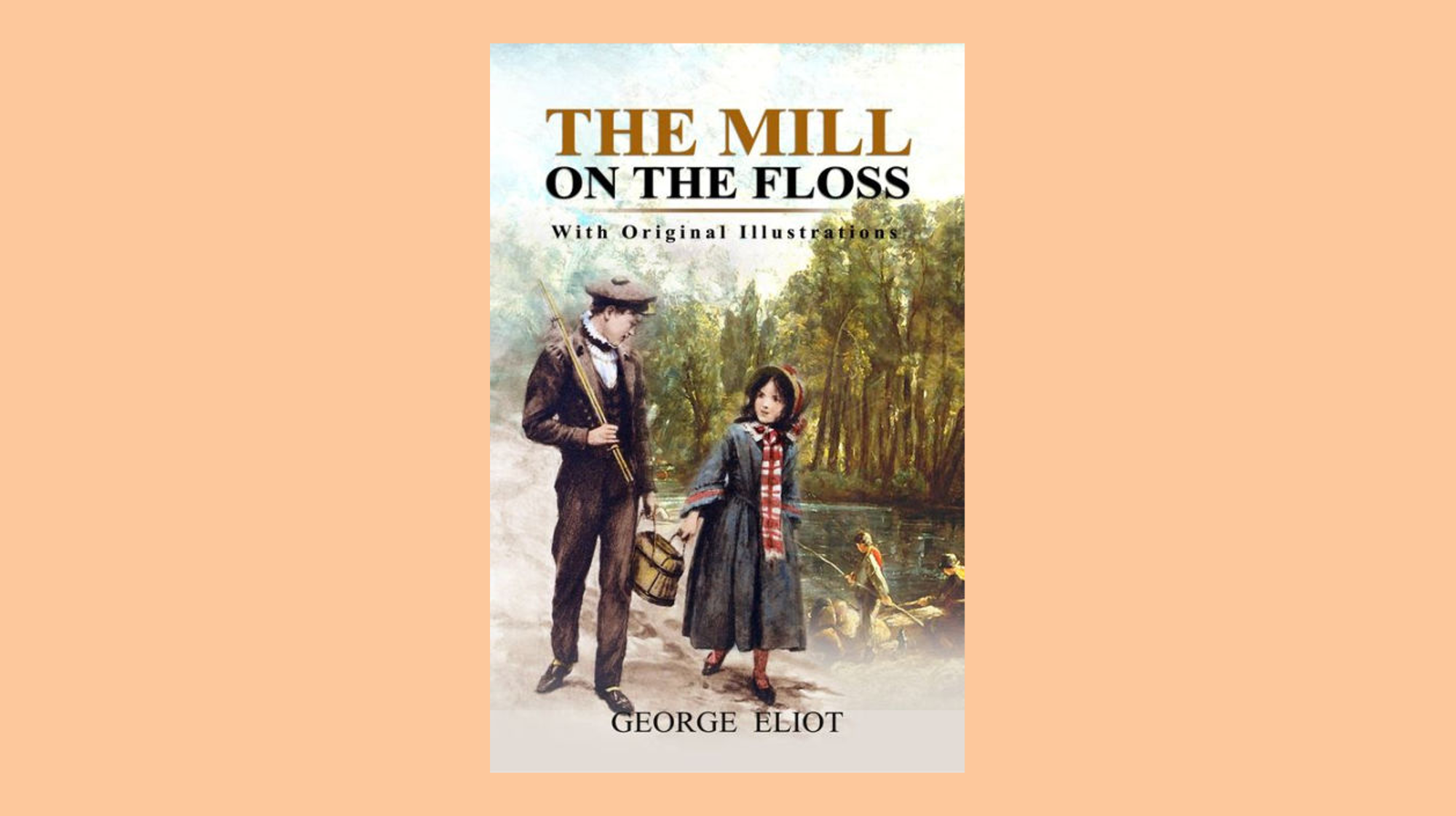

First published in 1860, The Mill on the Floss remains one of George Eliot’s most emotional and thought-provoking novels. Set in the English countryside, it tells the story of Maggie and Tom Tulliver—siblings whose childhood closeness is tested by the forces of pride, poverty, and tradition. In Eliot’s careful, honest prose, their lives become a reflection of the struggle between individual desires and social expectations.
The novel opens at Dorlcote Mill, where the Tulliver family has lived for generations. Tom is practical, loyal, and rigid. Maggie is sensitive, intelligent, and eager for more than her narrow world allows. As they grow up, their bond is challenged by financial ruin, family duty, and their very different views of life.
Maggie, in particular, feels trapped. She wants love, knowledge, and a sense of purpose—but at every turn, she’s told to submit, to sacrifice, to choose respectability over happiness. When she forms relationships with two very different men—a gentle, thoughtful friend named Philip Wakem and a passionate admirer named Stephen Guest—her choices lead to scandal and heartbreak.
Eliot doesn’t shy away from complexity. Maggie’s decisions are not always easy to defend, and Tom’s anger often feels unfair. But Eliot asks readers to look deeper, to see how limited choices and rigid social roles shape people’s lives. She uses the Tulliver family’s decline to question a society that values appearances over compassion, and tradition over personal growth.
The writing is rich, full of landscape, philosophy, and emotional depth. Some readers may find the beginning slow or the moral tone heavy at times. But Eliot’s insight into human behavior—especially the inner conflicts we all face—makes the novel timeless.
The river Floss, which runs through the story both literally and symbolically, becomes a powerful image of life itself: full of movement, shaped by unseen forces, beautiful but also dangerous. In the final chapters, as the river rises in flood, Eliot brings the novel to a dramatic and unforgettable conclusion.
At its heart, The Mill on the Floss is about love—in its many forms—and the cost of being true to oneself in a world that often punishes nonconformity. George Eliot gives us a heroine who is flawed but deeply human, and a story that still resonates today with anyone who has struggled to find a place between duty and desire.