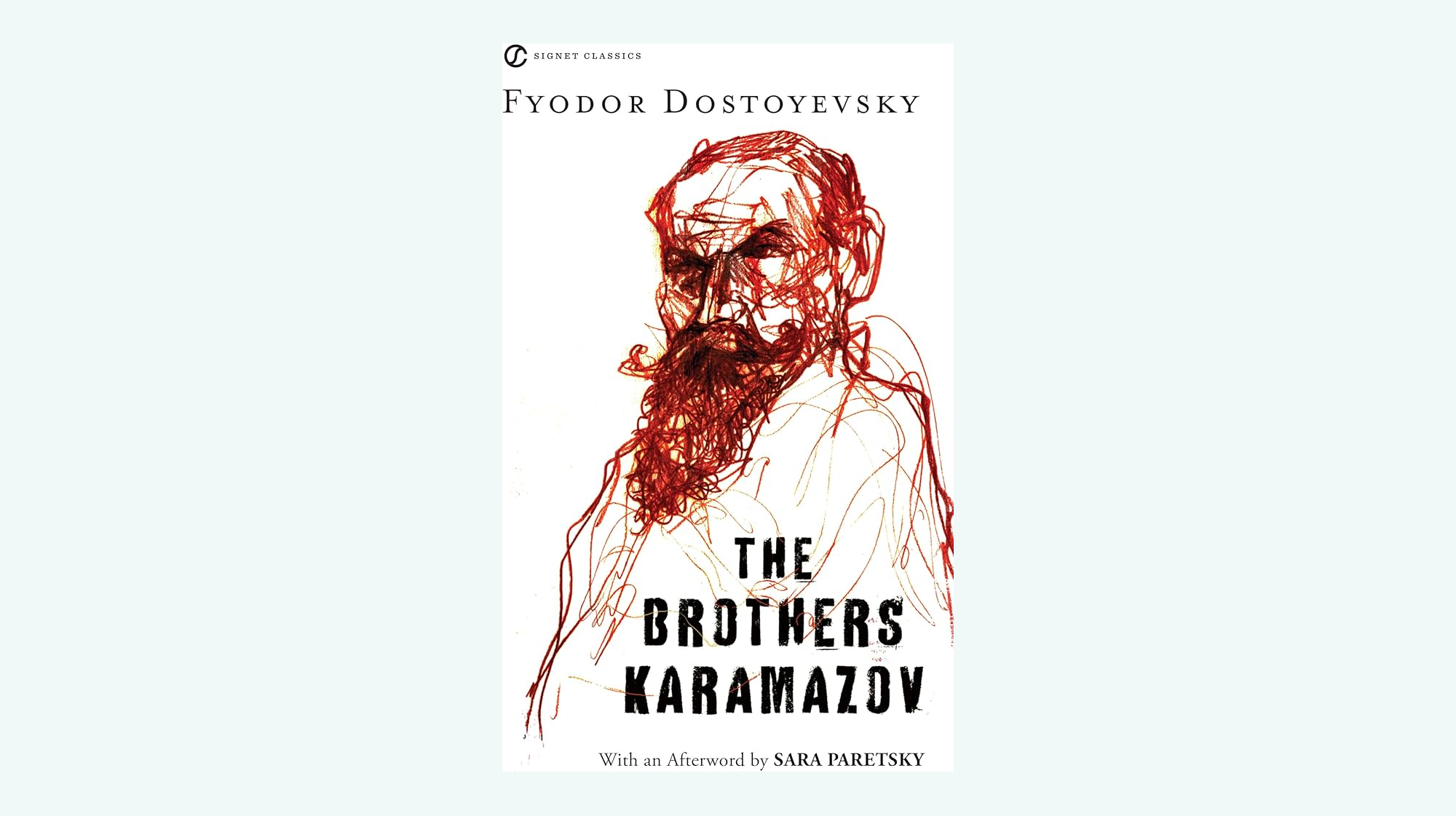

Few novels demand as much from their readers—or reward them so richly—as Fyodor Dostoyevsky’s The Brothers Karamazov. First published in 1880, just months before the Russian author’s death, the novel is a sweeping and philosophical portrait of a fractured family, a fractured nation, and above all, the fractured human spirit. It is not a quick or easy read. But for those willing to take the journey, it’s a story that lingers in the heart and mind long after the final page.
Set in 19th-century Russia, the novel centers on the Karamazov family: the selfish and immoral father, Fyodor Pavlovich, and his three legitimate sons—Dmitri, the passionate one; Ivan, the intellectual and skeptic; and Alyosha, the gentle novice monk—as well as the mysterious fourth, illegitimate son, Smerdyakov. When Fyodor is found murdered, suspicion quickly falls on Dmitri, who had both motive and opportunity. But the book is much more than a murder mystery. It’s an exploration of good and evil, faith and doubt, free will and fate.
Each of the brothers represents a different aspect of the human condition. Ivan’s famous “Grand Inquisitor” chapter—a parable embedded within the novel—is one of the most profound examinations of religion ever written, questioning whether a world with suffering can be reconciled with a belief in a loving God. Alyosha, by contrast, offers a quiet but powerful counterpoint: a belief that compassion and faith still matter, even when the world makes no sense.
What makes Dostoyevsky’s writing so remarkable is its emotional intensity. His characters don’t just wrestle with ideas—they embody them. They shout, weep, and tremble with the weight of their choices. The novel swings between moments of spiritual revelation and brutal realism, touching on themes like justice, redemption, and the very nature of morality.
Dostoyevsky’s Russia was a country in turmoil, deeply divided between old religious traditions and new revolutionary ideas. In many ways, this tension mirrors the crises we face today—questions about meaning, truth, and whether we are responsible for one another in a fractured society. The Brothers Karamazov feels strangely modern in that way, even though it was written nearly 150 years ago.
Some students may find the book’s length and philosophical passages intimidating, but its core story—about family, betrayal, and the search for truth—is universal. And Dostoyevsky doesn’t just ask questions. He forces readers to confront their own beliefs, to look into their souls, and ask what it means to live a good life.
In the end, The Brothers Karamazov isn’t just a novel. It’s a challenge. It’s a mirror held up to the reader, asking not just what kind of person Dmitri or Ivan is—but what kind of person you are.