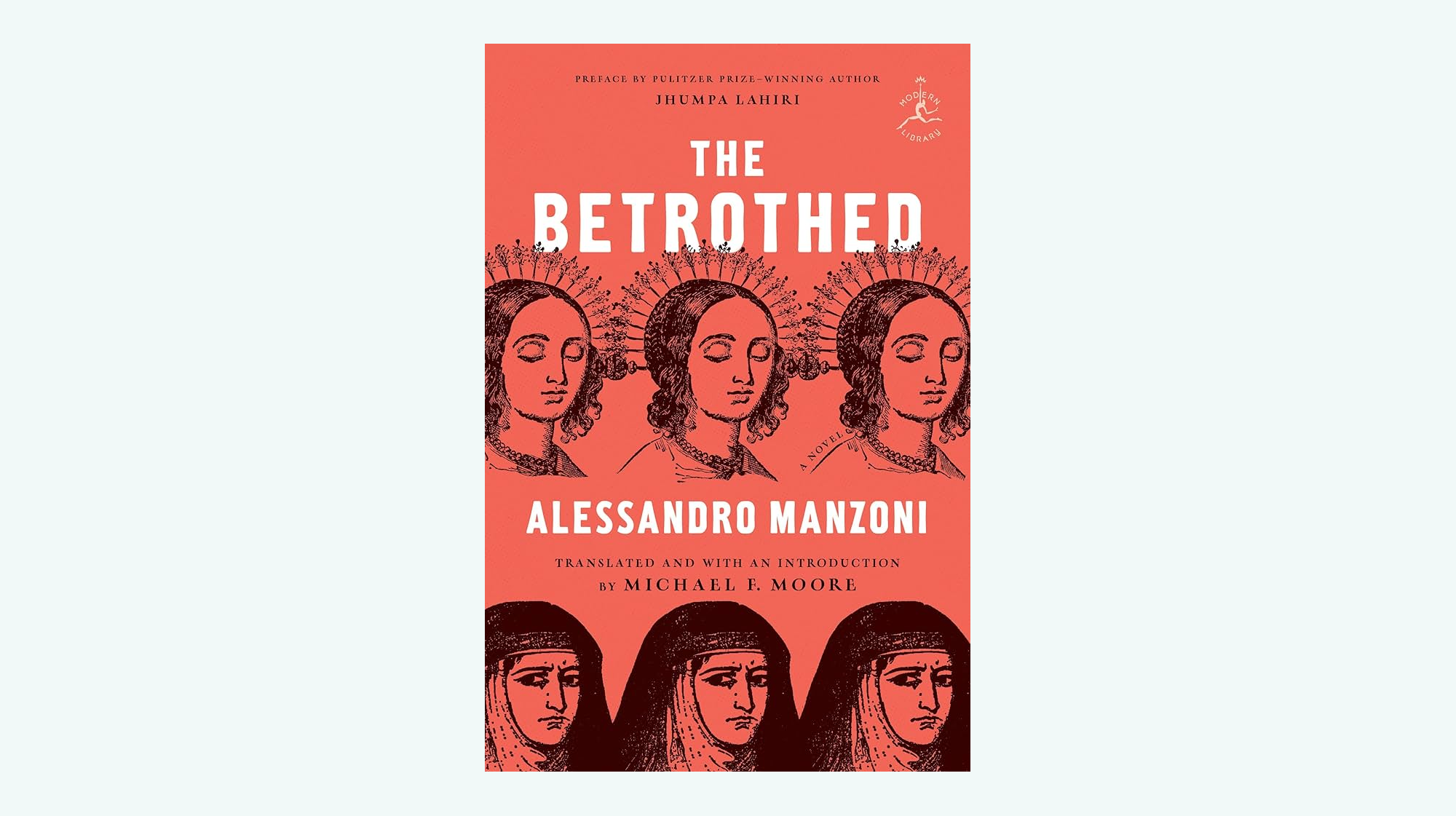

Alessandro Manzoni’s The Betrothed isn’t just a love story—it’s a historical epic, a moral drama, and a national novel that helped shape modern Italy. First published in 1827 and revised in 1842, this sweeping tale of two lovers, Renzo and Lucia, separated by corruption and crisis, remains a powerful portrait of how faith and perseverance can survive even the darkest of times.
Set in 17th-century Lombardy during Spanish rule, The Betrothed follows the trials of Renzo, a humble silk weaver, and Lucia, his devoted bride-to-be. Their path to marriage is blocked by Don Rodrigo, a petty nobleman who wants Lucia for himself. What begins as a local injustice quickly spirals into a journey through famine, war, plague, and social upheaval. Along the way, Manzoni weaves in real historical events—including the devastating Milanese plague of 1630—offering readers both a love story and a vivid lesson in European history.
At the heart of the novel is Manzoni’s deep Catholic faith and belief in divine providence. Unlike many modern stories of injustice, The Betrothed doesn’t glorify rebellion or romanticize vengeance. Instead, it presents virtue—especially humility, patience, and forgiveness—as the real tools of resistance against evil. In a world plagued by cruelty, it’s Lucia’s quiet integrity and Renzo’s struggle to do the right thing that shine the brightest.
Manzoni’s style is formal yet often playful, his narrator both wise and ironic. He doesn’t just tell a story—he comments on it, challenges the reader, and even criticizes the historical record. This makes The Betrothed feel not only literary but also thoughtful and alive. Though the pace can be slow and the prose dense by today’s standards, those who stay the course will find themselves deeply rewarded.
In Italy, The Betrothed is required reading, and for good reason. It’s a cornerstone of the Italian literary tradition, offering both a gripping narrative and a profound moral vision. In the English-speaking world, it deserves wider recognition—not just as a historical novel, but as a deeply human one.
For readers today, Manzoni’s masterpiece reminds us that justice may be delayed, virtue may be tested, but hope—rooted in faith and community—can still triumph. The Betrothed is not just a relic of the past. It is a novel for any age that seeks meaning in the struggle for love, justice, and truth.