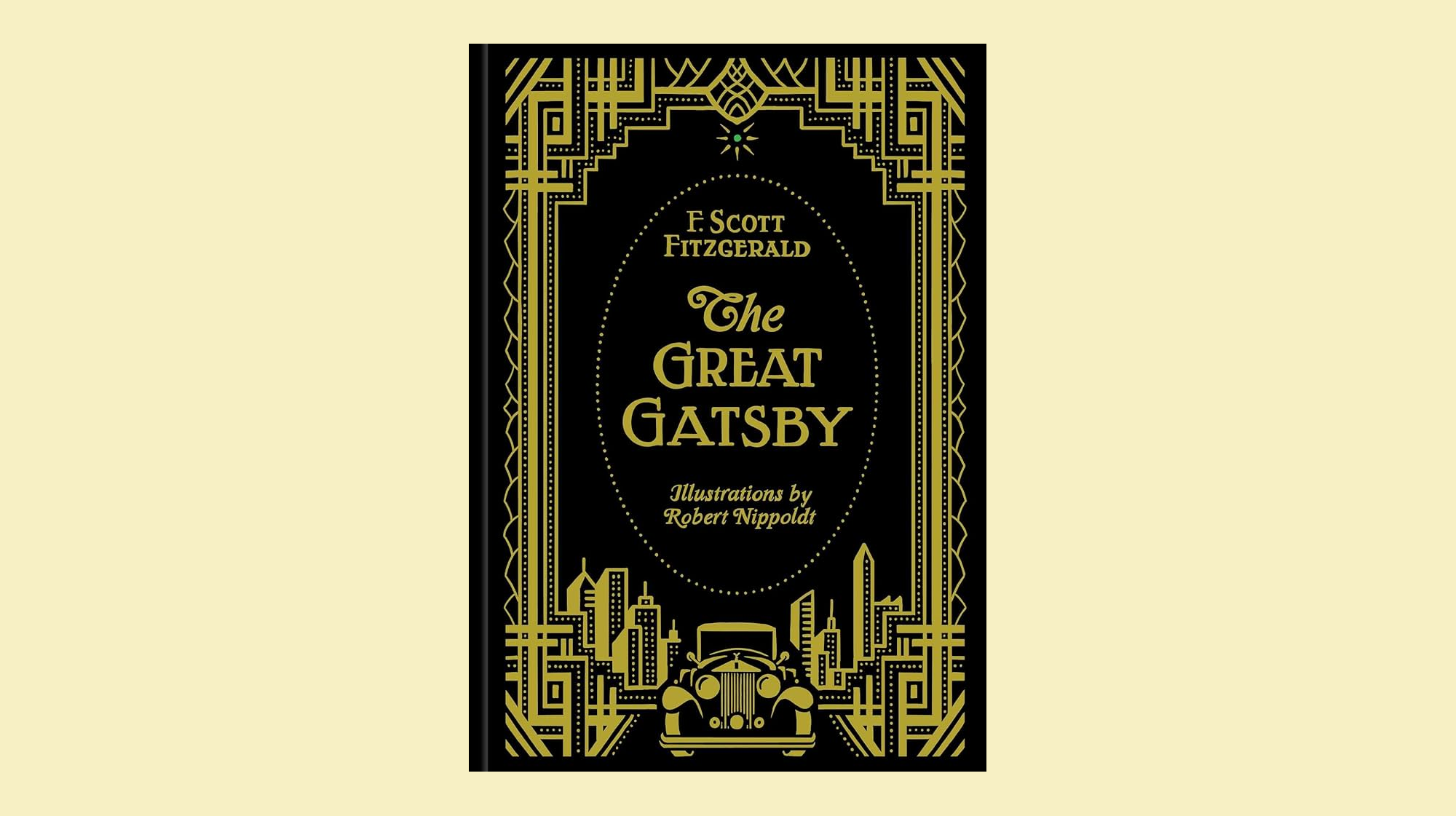

There are books that feel like they were written in a single, gasping breath—compressed with longing, regret, and the shimmer of things just out of reach. F. Scott Fitzgerald’s The Great Gatsby, first published in 1925 and famously ignored in its own time, is one such book. Fewer than 200 pages long, it is a novel obsessed with the illusion of grandeur and the ache that follows its inevitable collapse. Nearly a century later, that ache still resonates—haunting and beautiful, like the green light at the end of Daisy’s dock.
The story, as told through the reserved and increasingly disillusioned Nick Carraway, orbits around Jay Gatsby, a self-made millionaire with a murky past and an obsessive dream. Gatsby throws lavish parties in West Egg—spectacles of champagne, jazz, and shimmering ambiguity—but remains curiously apart from the revelry. He is waiting for something. Or rather, someone.
Daisy Buchanan, Gatsby’s lost love and the story’s golden ideal, is married now, ensconced in the comfortable indifference of East Egg’s old money. She becomes, for Gatsby, a symbol of everything he yearns to reclaim: not just love, but legitimacy, status, and the belief that the past can be rewritten with enough money and determination.
Fitzgerald’s prose is famously lyrical, often hovering just above the surface of sentimentality, only to land with unexpected force. Lines like “So we beat on, boats against the current, borne back ceaselessly into the past,” don’t merely close the novel—they echo long after, as if the story itself is caught in its own undertow.
It’s tempting to read Gatsby as a critique of the American Dream—and it is—but it’s also a lament for its seduction. Fitzgerald doesn’t just expose the dream’s hollowness; he understands its allure. Gatsby, for all his reinvention, is not a villain. He is, as Nick notes, “worth the whole damn bunch,” even as he clings to a fantasy that can never survive daylight.
What makes The Great Gatsby endure isn’t its plot—it’s slight, almost incidental—but its atmosphere, its elegiac tone, its sense of beauty coexisting with rot. The parties are dazzling, but the hangover is always coming. Behind every glittering chandelier is a cracked foundation.
In the end, it’s not just Gatsby who is disillusioned. It’s Nick, and perhaps the reader, too. We want to believe in Gatsby’s dream even as we watch it crumble. That’s the genius of Fitzgerald’s masterpiece: it flatters our illusions, only to gently, devastatingly, let them go.
And yet we return to it, generation after generation—not just to study its symbolism or annotate its themes, but because somewhere in its fragile pages is a truth we still haven’t stopped chasing.