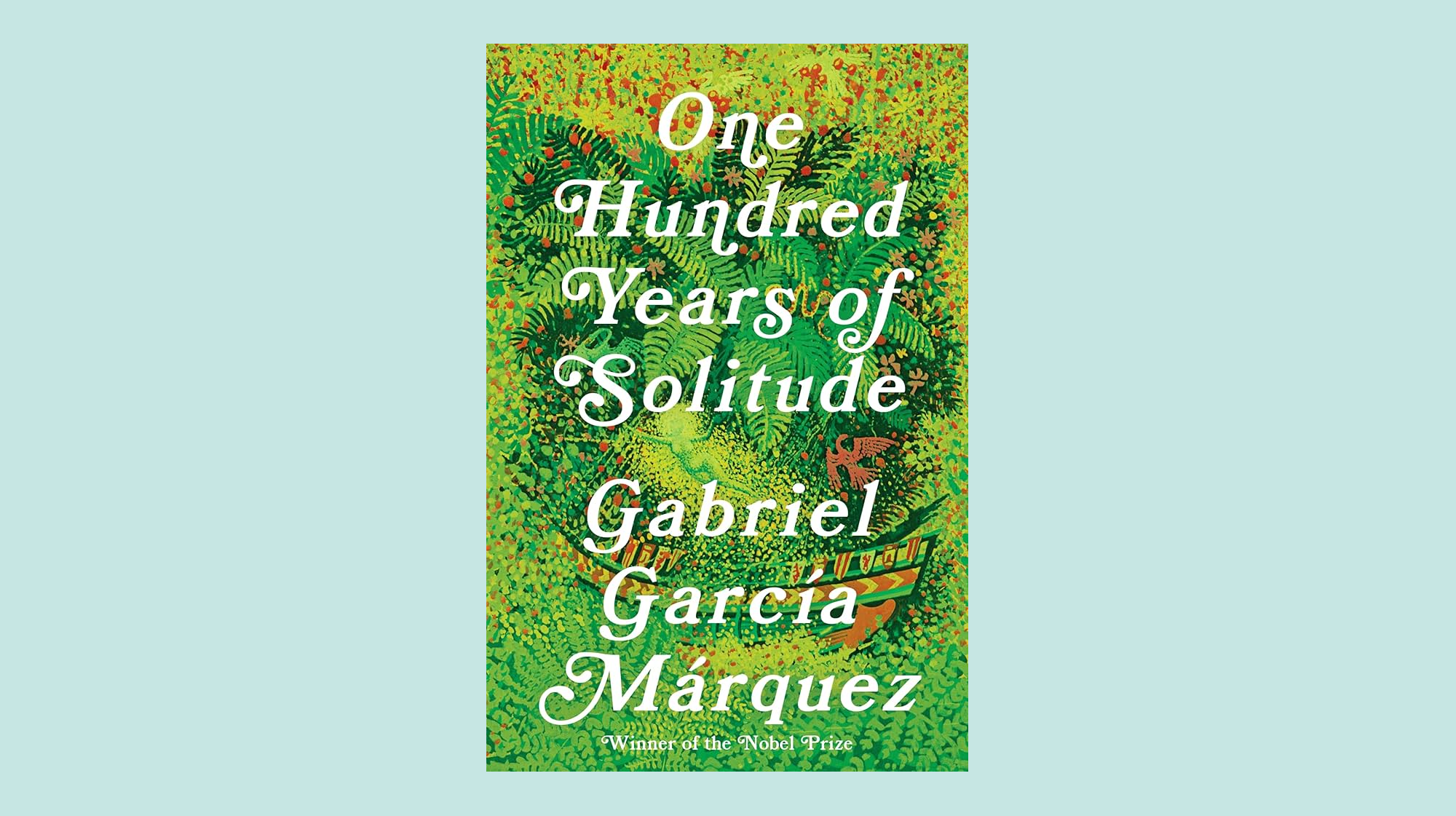

Some novels resist summary the way dreams resist logic. Gabriel García Márquez’s One Hundred Years of Solitude is one such book—a sprawling, incandescent epic that spins its own mythologies, bends time into a spiral, and renders the fate of a family indistinguishable from the fate of a continent.
Published in 1967 and translated into English by Gregory Rabassa three years later, the novel follows the Buendía family across generations in the fictional Colombian town of Macondo. It is not a family saga in the traditional sense; rather, it’s a narrative cyclone, looping through names, prophecies, and repetitions until the story becomes something closer to scripture than fiction.
At the novel’s center is José Arcadio Buendía, the town’s founder, who dreams of impossible inventions and is ultimately driven mad by his search for knowledge. Around him unfold lives both mundane and mystical—bloodlines plagued by war, solitude, and the recurring burden of fate. Characters die and return, age and un-age, fall in love with ghosts, levitate into the sky, birth children with pig’s tails. And through it all, Márquez maintains a voice so matter-of-fact, so dry in its delivery of the miraculous, that the fantastical becomes oddly believable.
This is the hallmark of magical realism, a term often pinned to Márquez but too narrow to capture his alchemy. He doesn’t merely introduce the magical into the real; he collapses the distinction entirely. In Macondo, history forgets itself, memory dissolves, and yet the banana company massacre—a brutal real-world event barely acknowledged in official histories—is rendered with a searing clarity that refuses to fade.
What is most extraordinary, perhaps, is the novel’s fluid sense of time. Decades pass in sentences; lives recur in names; endings are folded into beginnings. It’s not chronology Márquez pursues, but emotional and political truth: how nations repeat their mistakes, how families inherit more than they understand, how the pursuit of paradise inevitably curdles into ruin.
Despite its dizzying structure, One Hundred Years of Solitude is not difficult to read. It’s intoxicating. The prose (in Rabassa’s masterful translation) flows with the inevitability of myth. One reads not to find out what happens, but to be swept away by how it’s told. Every page hums with invention, every sentence seems touched by the surreal.
More than half a century later, the novel remains not just a landmark of Latin American literature, but a mirror—reflecting back our desires, our loneliness, our unending cycles. “Races condemned to one hundred years of solitude,” Márquez writes near the end, “did not have a second opportunity on earth.” It is a warning. It is a lament. And it is, like the novel itself, unforgettable.