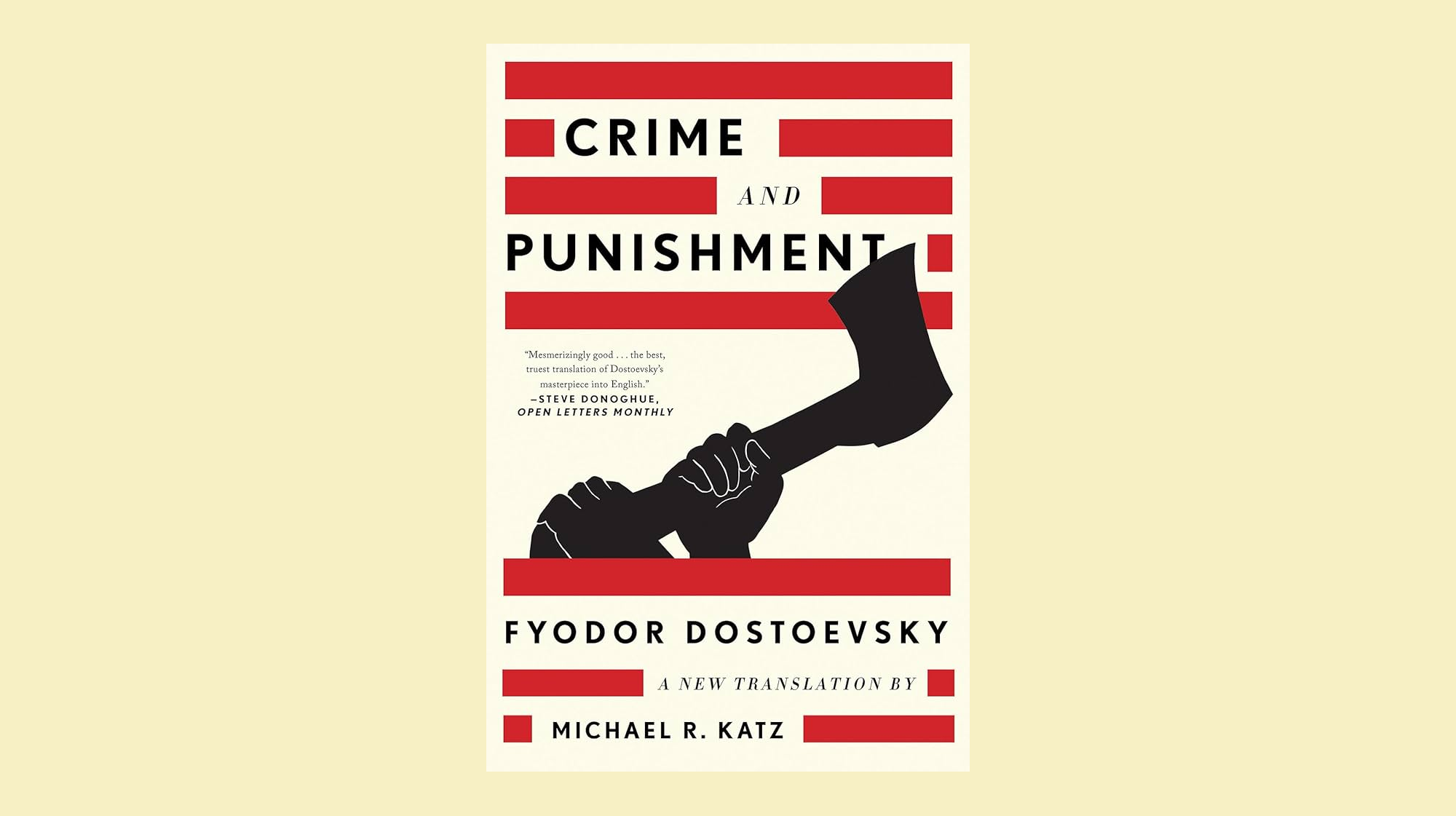

Some novels unfold like puzzles, inviting the reader to solve a crime, uncover a motive, restore order. Fyodor Dostoevsky’s Crime and Punishment, first published in 1866, is not one of those novels. There is no mystery here. The crime arrives early, and the punishment is as psychological as it is judicial. What follows is not a whodunit, but a harrowing descent into the mind of a man who thinks himself above morality—and the long, feverish unraveling of that illusion.
The man is Rodion Raskolnikov, a former student scraping by in the back alleys of St. Petersburg, intellectually arrogant and increasingly unmoored. Convinced that certain “extraordinary” individuals have the right to transgress moral law for the greater good, he murders a pawnbroker—an act he believes will confirm his superiority and liberate him from guilt. Instead, it sets off a moral and spiritual collapse that unfolds with claustrophobic intensity.
Dostoevsky was writing in a Russia wrestling with radical new philosophies—utilitarianism, nihilism, socialism—and Crime and Punishment functions both as a psychological case study and a rebuke. Raskolnikov is less a villain than a test subject, and Dostoevsky’s novel is his laboratory. The result is not sterile but agonizing: a city of shadows, a mind in torment, a conscience that refuses to die.
The prose, even in translation, pulses with urgency. Dostoevsky’s St. Petersburg is not a backdrop but a character—a damp, delirious labyrinth of alleyways, taverns, and flophouses that mirrors Raskolnikov’s internal chaos. The novel’s structure, too, is feverish: long monologues, sharp interrogations, recurring dreams, and sudden flashes of grace. At times it reads less like a realist novel than a theological hallucination.
And yet, for all its intensity, the novel is remarkably humane. Characters like Sonya, the saintly prostitute, and Porfiry, the detective who teases truth from guilt, offer glimpses of compassion and redemption. Dostoevsky was less interested in crime than in conscience—what it means to be human, to suffer, to be forgiven. Raskolnikov’s arc is not a courtroom drama but a crucible of the soul.
In today’s cultural climate—where questions of justice, guilt, alienation, and redemption swirl through headlines and feeds—Crime and Punishment remains uncannily relevant. Its exploration of ideology untethered from empathy, of intellect unmoored from responsibility, still speaks to our age. The novel is not interested in easy answers. It wants the reader to sit in the discomfort of the questions.
This is not a comfortable book. It is not meant to be. But it is unforgettable. Dostoevsky did not just write a novel; he cracked open the human psyche and dared his readers to look inside. In the trembling hands of Raskolnikov, we find a mirror—dark, distorted, and disturbingly familiar.
Crime and Punishment is not a novel one finishes and forgets. It lingers. It haunts. And, like its tormented protagonist, it refuses to let go.