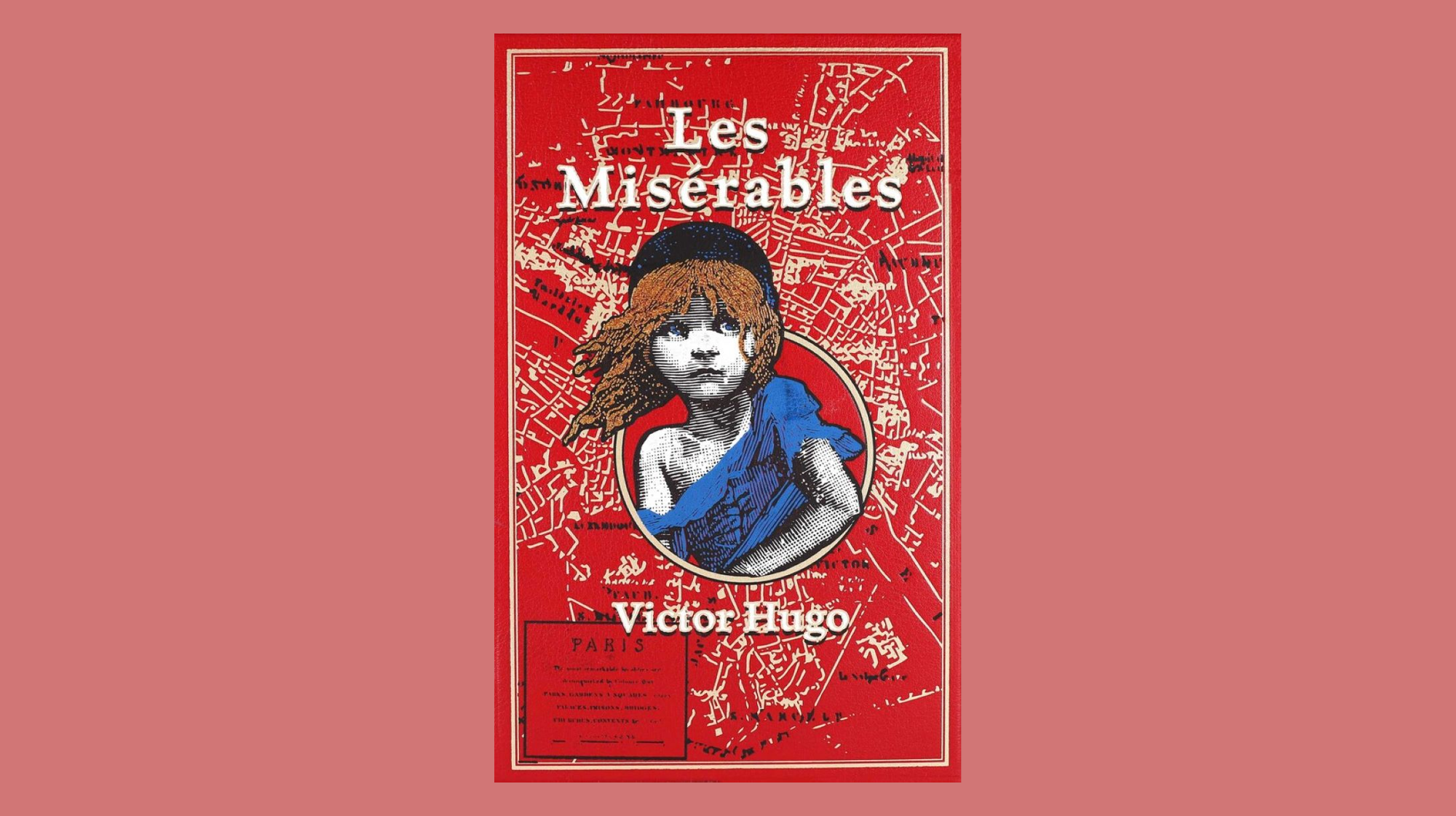

Victor Hugo did not write short books, and he certainly did not write small ones. Les Misérables, first published in 1862, is sprawling in every sense—a novel that spans decades, revolutions, ideologies, and an entire nation’s moral soul. To read it is not simply to follow a plot, but to be submerged in a moral universe where the stakes are nothing less than redemption, justice, and the fate of the human heart.
At its center is Jean Valjean, an ex-convict imprisoned for stealing a loaf of bread, whose journey from hardened criminal to self-sacrificing guardian is as improbable as it is unforgettable. Around him orbit a constellation of vividly drawn figures—Fantine, the fallen mother; Cosette, her innocent daughter; Marius, the idealistic student; Javert, the unbending officer of the law. Each is more than a character; they are symbols and people all at once, drawn with the kind of deep sincerity only Hugo could risk without irony.
The plot moves between intimate suffering and sweeping social upheaval: from the dank prison of Toulon to the barricades of revolutionary Paris, from candlelit monasteries to the fetid sewers below the city. But what holds it all together is Hugo’s moral vision—a belief in the possibility of grace, even in the most degraded corners of society. If Dickens exposed injustice, Hugo insisted that the response to it must be compassion.
Reading Les Misérables today, in an age both saturated with injustice and numb to it, is an act of reawakening. Hugo’s novel is not subtle—he preaches, digresses, and occasionally disappears into a hundred-page meditation on the Battle of Waterloo or the structure of the Paris sewer system. And yet, the book’s capaciousness is part of its glory. Hugo saw the world as something vast and trembling, demanding that the novelist not merely entertain, but bear witness.
There are passages of soaring lyricism, and there are pages of political theory. But at its core, Les Misérables remains one of literature’s greatest arguments for the primacy of mercy over vengeance, and of love over law. It is a novel that insists on the possibility of transformation—not as a neat arc, but as a hard-won, grace-filled struggle against the forces that crush the spirit.
In an era of moral ambiguity, Les Misérables dares to be clear-eyed and idealistic. It believes that even in the darkest of human lives, there is a soul worth saving. That is not a fashionable belief. But it is a necessary one.
Victor Hugo did not ask small questions. His novel, in all its operatic grandeur, asks the biggest of all: What do we owe each other? Les Misérables doesn’t give easy answers. But it gives them with a depth of feeling—and a faith in humanity—that still resonates more than 160 years later.