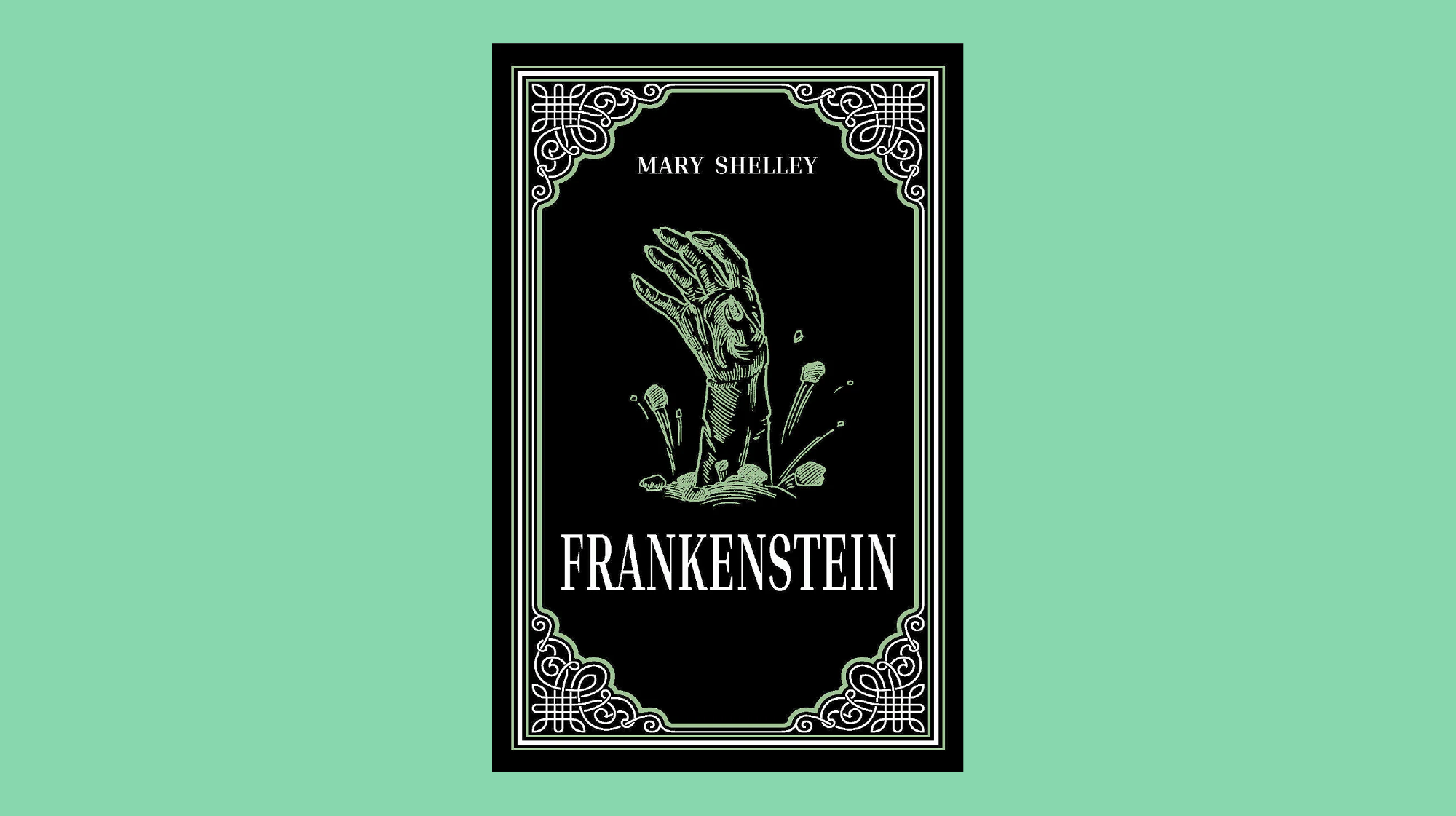

It begins in the cold, with a letter written amid the ice. And it ends, still cold, with a figure drifting into the darkness, consumed by grief and fury. Mary Shelley’s Frankenstein; or, The Modern Prometheus, first published anonymously in 1818 and revised under her name in 1823, is a novel born of a fevered imagination—and a remarkably modern anxiety.
A work of gothic fiction, Romantic philosophy, and proto-science fiction, Frankenstein is also, at its core, a parable about the dangers of unchecked ambition and the human cost of intellectual pride. It has been misread for centuries—often reduced to a Halloween mask, or misattributed to its own creation. But reread with care, Frankenstein remains a deeply philosophical novel, remarkably prescient and quietly radical.
Victor Frankenstein, a young Swiss scientist intoxicated by Enlightenment ideals, sets out to conquer death. In a burst of morbid genius, he assembles a creature from stolen corpses, animates it, and then recoils in horror. Abandoning his creation, Victor unleashes a tragedy that unspools with classical inevitability. The creature, rejected and alone, educates himself in secret, grows in eloquence, and becomes more articulate—and arguably more humane—than his maker. But spurned at every turn, he turns to revenge, leaving behind a trail of sorrow that is, in the end, as much Frankenstein’s responsibility as his own.
What’s striking about Shelley’s novel—written when she was just 18—is not simply its eerie premise, but its moral complexity. It is not, as the films would have it, a simple battle between creator and monster. It is a meditation on the responsibilities of parenthood, the alienation of the outsider, and the dangers of a science severed from ethics. Shelley was writing in the shadow of revolutions—political, industrial, and intellectual—and Frankenstein pulses with the fear that knowledge, once unleashed, cannot be contained.
The novel’s form is as layered as its ideas. A frame narrative wrapped in letters leads to Victor’s personal account, which contains, in turn, the creature’s own story. This nesting of voices is no mere ornament. It draws the reader into an ever-deepening moral spiral, where sympathies shift and certainties crumble. By the time the creature tells his tale—his yearning for love, his discovery of Milton, his attempts to be good—it becomes difficult to call him a villain at all. He is the result not of science alone, but of cruelty, loneliness, and rejection.
Frankenstein is a novel that anticipates Freud, Darwin, and even AI. It asks what it means to create life, and what it means to reject it. In today’s world—where technologies from artificial intelligence to genetic engineering pose ethical dilemmas Shelley couldn’t have imagined—her questions remain deeply relevant. What do we owe our creations? What makes us human? And at what cost comes knowledge?
And yet, for all its intellectual ambition, the novel is at its most affecting in its emotional clarity. Shelley, who had lost a child and would lose more, knew the pain of grief and the ache of absence. Frankenstein is ultimately a book about longing—longing for love, for connection, for meaning in a world that offers none.
Two centuries later, Mary Shelley’s vision has not dulled. Frankenstein is still read, still adapted, still misquoted, still feared. Its monster is not evil—it is unloved. And that, Shelley seems to suggest, is the real horror: not what we create, but what we abandon.