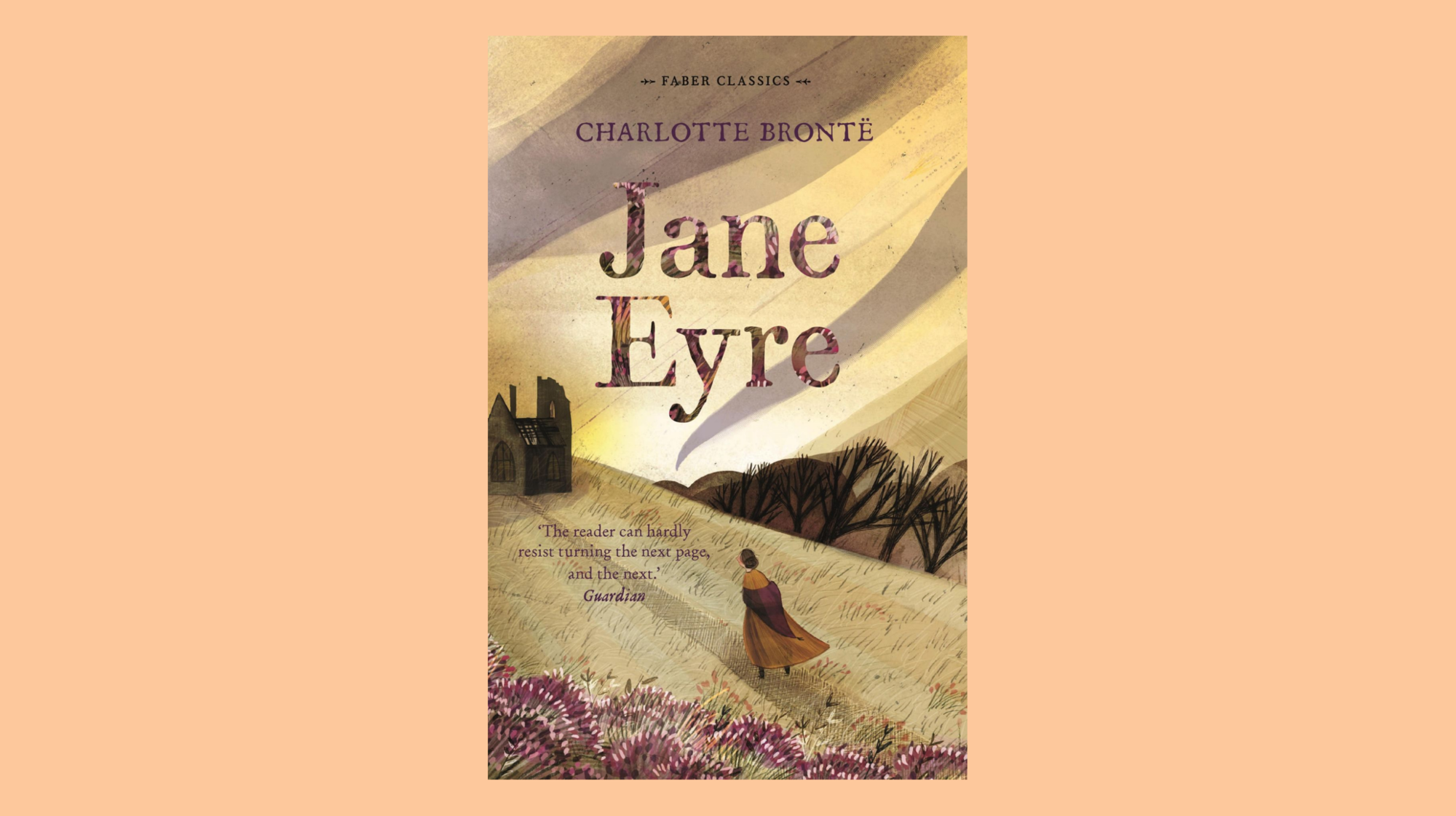

There are novels so rooted in the literary landscape that their outlines seem familiar even to those who’ve never read them. A plain governess. A haunted mansion. A brooding man with a secret. But Jane Eyre, published in 1847 under the pseudonym Currer Bell, resists simplification. Charlotte Brontë’s landmark novel is not merely a gothic romance, nor is it just a bildungsroman. It is a cry of moral defiance disguised as a love story—and nearly two centuries later, its voice still carries.
From the first page, Jane burns. An orphan, unloved by her relatives and mistreated at school, she refuses to become meek or bitter. “I am no bird,” she famously declares, “and no net ensnares me.” Brontë’s heroine is not content to survive; she demands to be seen as a full human being. In an era when female characters were often decorative or tragic, Jane’s insistence on spiritual and emotional autonomy was—and remains—electrifying.
The novel traces her life from girlhood to adulthood, from the cold halls of Gateshead and the cruelty of Lowood to the eerie corridors of Thornfield Hall. It’s there that she meets Mr. Rochester—gruff, sardonic, magnetic. Their relationship simmers with intellectual and emotional tension. But this is not the usual tale of the poor girl redeemed by love. When Jane learns that Rochester is already married, she leaves—not out of prudery or melodrama, but principle.
What distinguishes Jane Eyre is its moral architecture. Brontë allows her heroine the depth of an inner life guided by conscience, faith, and dignity. Even when she returns to Rochester, blinded and humbled, it is not as a savior or a supplicant, but as an equal. The novel insists on the radical notion that love without self-respect is not love at all.
If the prose can at times feel florid to modern ears, the emotional realism still resonates. Brontë’s ability to write the inner turbulence of a woman too strong for her time gives the novel its pulse. It is not simply that Jane speaks her mind—it is that Brontë gives her mind the narrative, unfiltered and unrelenting.
In today’s literary climate—where stories are often filtered through irony, pastiche, or deconstruction—Jane Eyre feels startlingly sincere. Its gothic trappings, from the madwoman in the attic to the supernatural overtones, may be genre flourishes, but the heart of the novel is not in the plot twists. It is in a quiet, persistent question: What does it mean to live with integrity in a world that constantly asks you to compromise?
The novel has endured, not just because it is beautifully written, but because it invites each generation to reimagine what strength and independence look like in a woman. Jane is not glamorous. She is not always kind. But she is clear-eyed, unyielding, and deeply alive.
In the end, Jane Eyre is not a tale of rescue but of arrival. The castle may burn, the romance may falter, but Jane endures. She claims her place not because it is given, but because she insists it is hers. In that, Charlotte Brontë gave us not just a heroine for her time—but for all time.