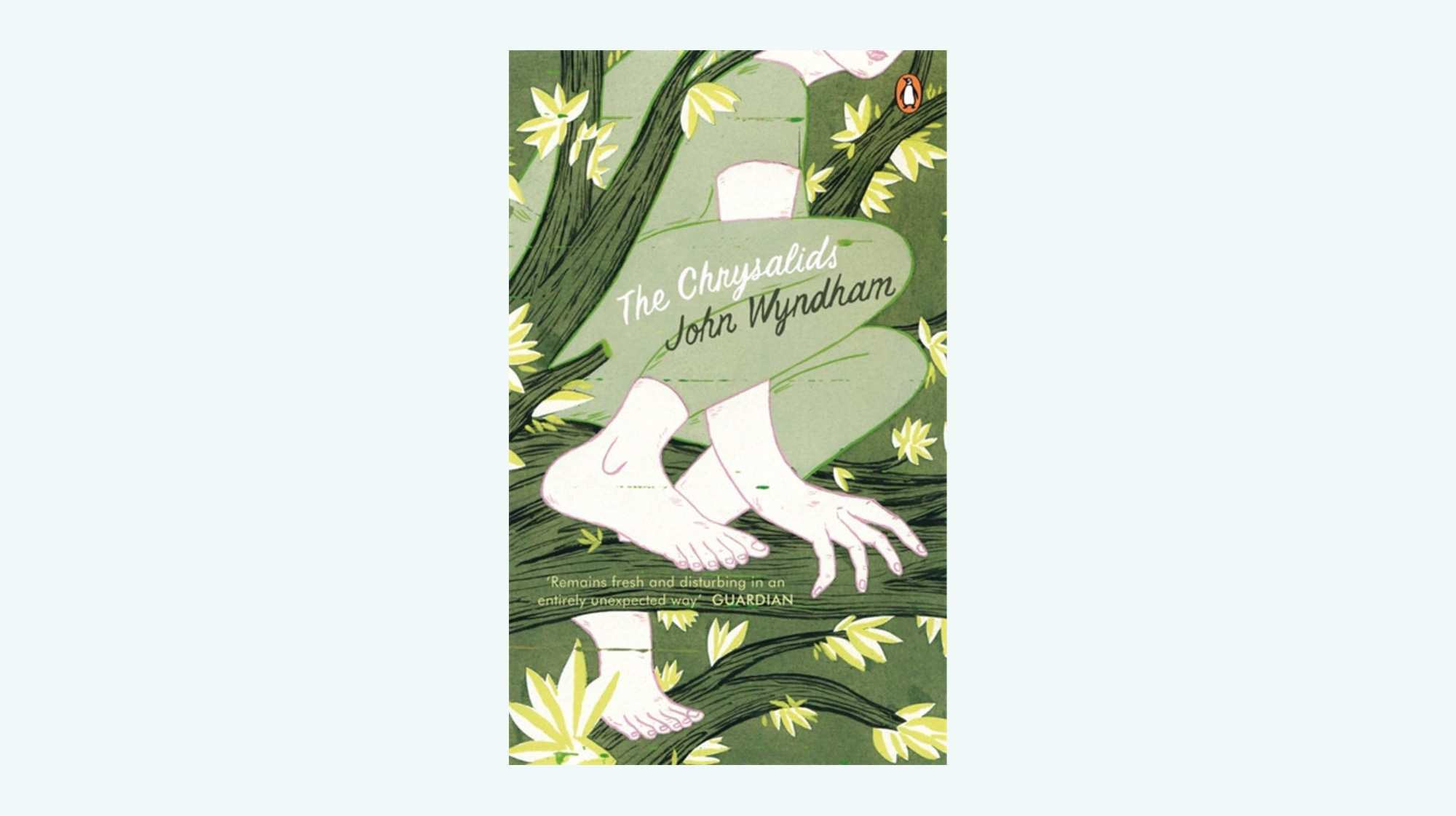

John Wyndham’s 1955 novel The Chrysalids is often praised as a thought-provoking work of post-apocalyptic science fiction, lauded for its exploration of fear, difference, and social conformity. Yet beneath its veneer of speculative adventure lies a troubling treatment of Christianity and traditional values that demands scrutiny. Rather than offering a balanced inquiry into faith and progress, The Chrysalids frequently resorts to stereotyping religious belief as blind fanaticism, while promoting a worldview that risks normalizing behaviors destructive to societal cohesion and human flourishing.
Set in the rigidly theocratic community of Waknuk, Wyndham’s novel presents a dystopia in which adherence to strict biblical doctrine is depicted as synonymous with cruelty, ignorance, and oppression. This sweeping characterization oversimplifies and diminishes the rich moral framework that Christianity provides. The novel’s implied critique casts religion not as a source of order and meaning, but as an obstacle to progress and acceptance—a portrayal that neglects the enduring role of faith in grounding natural reason and objective truth.
Moreover, the novel’s bleak depiction of religious communities exaggerates to demean legitimate Christianity. The faithful are portrayed almost uniformly as reactionary and unthinking, while those who reject tradition are cast as enlightened and heroic. This dichotomy reduces complex social dynamics into caricature, undermining serious discussion about how societies negotiate change while preserving essential values.
The Chrysalids’ treatment of faith and “difference” ultimately undermines the very foundations of social stability and moral clarity. Its narrative encourages readers to question established doctrines but offers no coherent alternative framework grounded in reason or tradition. Instead, it risks promoting a utopian vision that dismisses the wisdom embedded in centuries of religious and cultural inheritance.
While Wyndham’s literary craft and imaginative world-building deserve recognition, the ideological underpinnings of The Chrysalids warrant critical examination. In portraying Christianity as an enemy of progress and embracing mutation as an unqualified good, the novel reflects mid-20th-century anxieties but also advances a worldview at odds with the preservation of human dignity, natural law, and social order.
The Chrysalids may challenge its readers, but it also demands that we question not only its fictional horrors, but the real-world implications of its unbalanced critique.