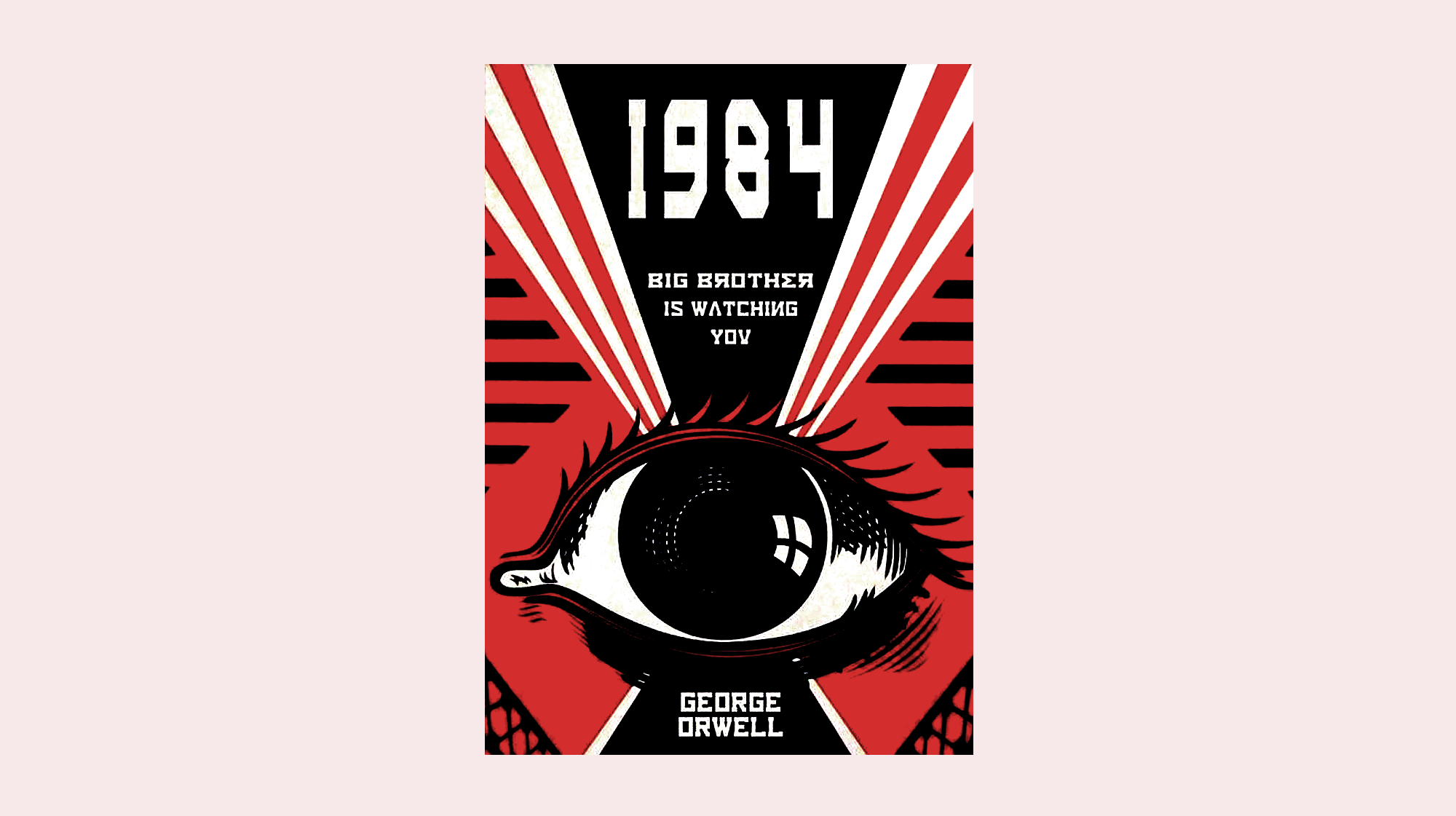

When George Orwell published 1984, he envisioned a future where tyranny would not arrive with the crash of jackboots alone, but through the quiet erasure of truth. Seventy-five years later, his vision has not dimmed—it has, in many ways, become eerily familiar. If 1984 once read like dystopian prophecy, today it reads like a mirror.
The novel, set in the imagined totalitarian state of Oceania, follows Winston Smith, a low-ranking Party member who dares to question the regime of Big Brother. Oceania is a world where every word is monitored, every memory is suspect, and even thoughts can be criminal. The regime’s omnipresent slogan—“WAR IS PEACE, FREEDOM IS SLAVERY, IGNORANCE IS STRENGTH”—is not simply contradiction, but a blueprint for obedience. What Orwell captured, in bleak and surgical prose, was the architecture of modern authoritarianism: surveillance, propaganda, and the brutal rewriting of history.
At the core of the novel lies the concept of “doublethink,” the ability to hold two contradictory beliefs at once and accept both as true. Orwell’s rendering of this mental gymnastics remains one of his most chilling contributions to political literature. In a time when facts are increasingly contested, and misinformation is engineered with surgical precision, 1984 feels less like fiction and more like a manual for resisting the erosion of reality.
Winston’s rebellion is modest—he keeps a diary, he falls in love—but in Oceania, such acts are heresy. His relationship with Julia is not just romantic but insurgent: a refusal to let the Party claim even the most private of affections. Their brief sanctuary is crushed, of course, by the all-seeing eye of the Thought Police. The torture that follows, in the Ministry of Love, is not merely physical but existential: Orwell does not let us look away from the violence required to make people believe lies.
The novel’s final pages remain among the most devastating in modern literature. Winston, broken and hollow, confesses to loving Big Brother. The rebellion has been erased—not just from the record, but from the soul. Orwell understood that the most effective tyrannies are those that make people complicit in their own subjugation.
For a book so associated with bleakness, 1984 is also a masterclass in clarity. Orwell’s prose is plain, exact, and free of ornament, as though he were aware that any rhetorical flourish might obscure the truth he was so desperate to convey. His journalism honed the novel’s moral urgency. Every sentence feels like it was written with a clenched jaw.
Reading 1984 in the 21st century is not an academic exercise. It is an act of reckoning. In an age of algorithmic surveillance, biometric tracking, and political disinformation, Orwell’s nightmare has become a vocabulary. “Thoughtcrime,” “Newspeak,” “memory hole”—these are no longer inventions. They are cultural currency.
But perhaps the most disturbing element of 1984 is not its prediction of the tools of control. It’s its understanding of human weakness. The novel does not promise that people will resist tyranny. It suggests they will learn to live with it—and even to love it.
In that, Orwell’s vision has lost none of its sting. If anything, its relevance grows sharper by the year. 1984 is not a warning from the past. It is a confrontation with the present.