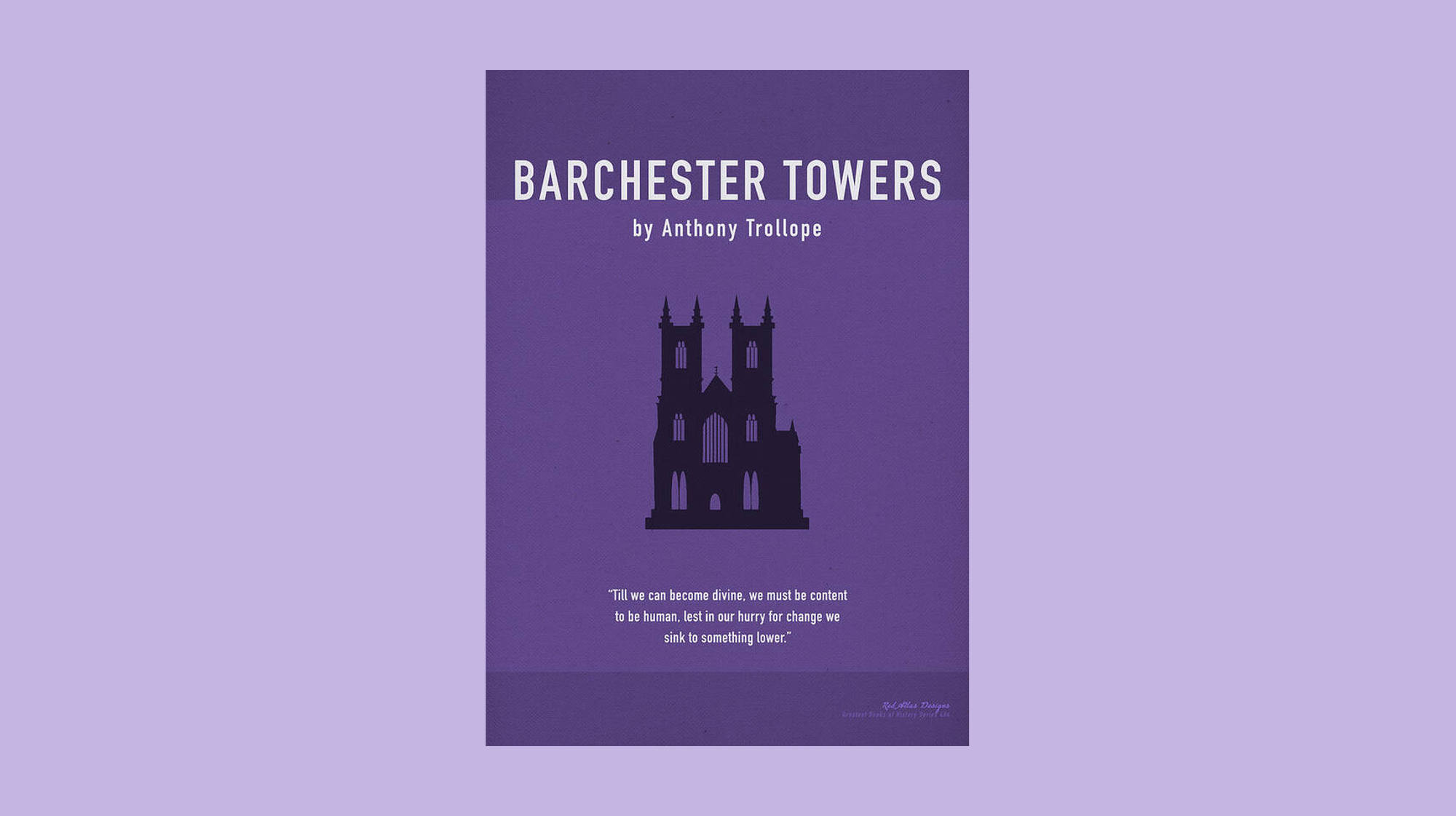

At first glance, a novel about church politics in a quiet English cathedral town might not seem exciting. But in Barchester Towers, Anthony Trollope turns this seemingly dull setting into a rich stage for drama, wit, and social commentary. Published in 1857, the novel is the second in Trollope’s Chronicles of Barsetshire series, and it remains one of his most beloved works—part comedy, part character study, and all charm.
Set in the fictional town of Barchester, the story picks up after the death of the old bishop. A new bishop, Dr. Proudie, is appointed—along with his strong-willed, overbearing wife, Mrs. Proudie, and the slippery, ambitious chaplain Mr. Obadiah Slope. Their arrival sets off a clash with the old guard of Barchester, especially the kindly Archdeacon Grantly and the gentle but indecisive Mr. Harding.
In the middle of this church rivalry is Eleanor Bold, a young widow and the daughter of Mr. Harding. She becomes the object of unwanted romantic attention, particularly from Mr. Slope, whose motives are far from pure. The book balances satire with serious themes as Trollope explores issues of power, tradition, gender roles, and integrity.
What makes Barchester Towers stand out is Trollope’s keen eye for character. He writes with subtle humor and a deep understanding of human behavior. Even the villains—like the scheming Mr. Slope or the pompous Mrs. Proudie—are drawn with complexity and occasional sympathy. Trollope doesn’t just mock the church’s politics; he uses them to reflect broader truths about society and personal ambition.
The novel is not fast-paced by today’s standards, but its charm lies in the small battles, the clever conversations, and the gradual unfolding of relationships. Trollope’s narrator occasionally breaks the fourth wall, addressing readers directly with a wink and a shrug, making the book feel surprisingly modern.
Barchester Towers may not have the high drama of Dickens or the romance of Austen, but its quiet intelligence and gentle satire give it lasting appeal. Trollope asks us to pay attention to the petty details of social life—not because they are petty, but because they reveal the deeper truths about who we are.
For readers willing to slow down and listen to the rhythm of 19th-century life, Barchester Towers offers sharp insight, warm humor, and a timeless reminder that even the most ordinary people can be the center of great stories.