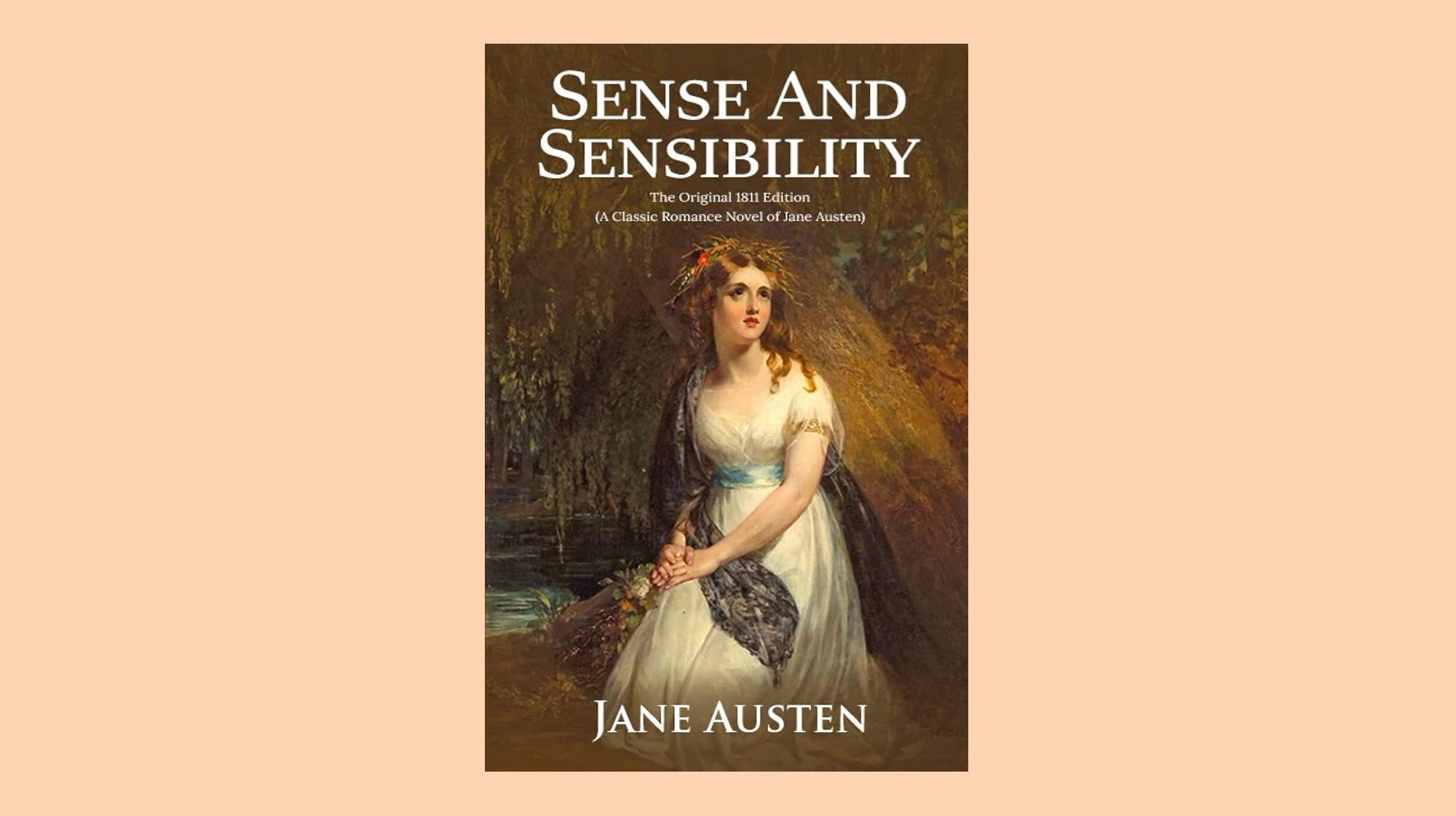

Consider the early English novel. So often, it is hemmed in by the constraints of its own drawing rooms — clinking teacups, strained glances, and the brittle conversational fencing that passed for flirtation. It is easy, in hindsight, to consign such novels to the polite past, their tensions quaint, their revolutions miniature. But to do so is to underestimate the kind of cunning that can reside beneath a muslin gown, or the quiet devastation of a clipped remark. Jane Austen’s Sense and Sensibility, first published in 1811, understood this from the start — and wielded it like a stiletto.
There is a certain irony in calling this Austen’s debut, since even in her literary infancy, she wrote with the kind of assurance most writers spend a career chasing. The story of the Dashwood sisters — Elinor, the personification of self-command, and Marianne, her emotional foil — is at once a comedy of manners and a clear-eyed critique of the economic realities that governed women’s lives. For all its romance, this is not a sentimental novel. It is a merciless one.
Austen, with the precision of a surveyor, maps the contours of propriety and power in early 19th-century England. The inheritance laws that render the Dashwood women precarious are not dry legalisms but engines of plot and character. When Mr. Dashwood dies and his estate is entailed away from his daughters, the novel does not merely begin — it cracks open, revealing a world in which virtue is prized, but money speaks first.
The title suggests a dichotomy, but Austen is too subtle for binaries. Elinor’s sense is not bloodless, and Marianne’s sensibility is not without its reason. What animates the novel is not their opposition but their slow convergence — how suffering instructs both, and maturity reveals itself as an uneasy fusion of their traits. Austen allows neither sister to triumph wholly, nor to fail without dignity.
In Austen’s hands, dialogue becomes duel. Her characters are often most dangerous when they are being most polite. Consider Fanny Dashwood, who orchestrates the Dashwood women’s exile with the smiling cruelty of someone offering you a seat just as the chair is being pulled away. Or Lucy Steele, whose weaponized sweetness is all the more unsettling for being perfectly socially sanctioned.
And yet there is warmth here, too. Edward Ferrars and Colonel Brandon — often maligned as dull — are radical in their steadfastness. They do not dazzle; they endure. Austen gives us no Mr. Darcy to swoon over, no grand transformation of character. Instead, Sense and Sensibility asks us to consider what love looks like when the drama subsides, and life insists upon compromise.
Two centuries later, the novel still glints with intelligence. If Austen’s world seems narrow, it is only because her scalpel was so fine, her eye so unflinching. Sense and Sensibility is not a love story, or not only one. It is a study in survival — social, emotional, and financial. Austen knew that to marry well was not just romantic fulfillment, but a kind of salvation. She also knew that salvation, like everything else, comes at a price.
It is worth remembering that Austen published anonymously. The title page read, “By a Lady.” Yet there is nothing vague or retiring in these pages. This “lady” wrote like a general in lace, waging war with wit, staking her claim in a world that would have preferred her silent. We’re still reading because she didn’t stay quiet. She sharpened her pen instead.