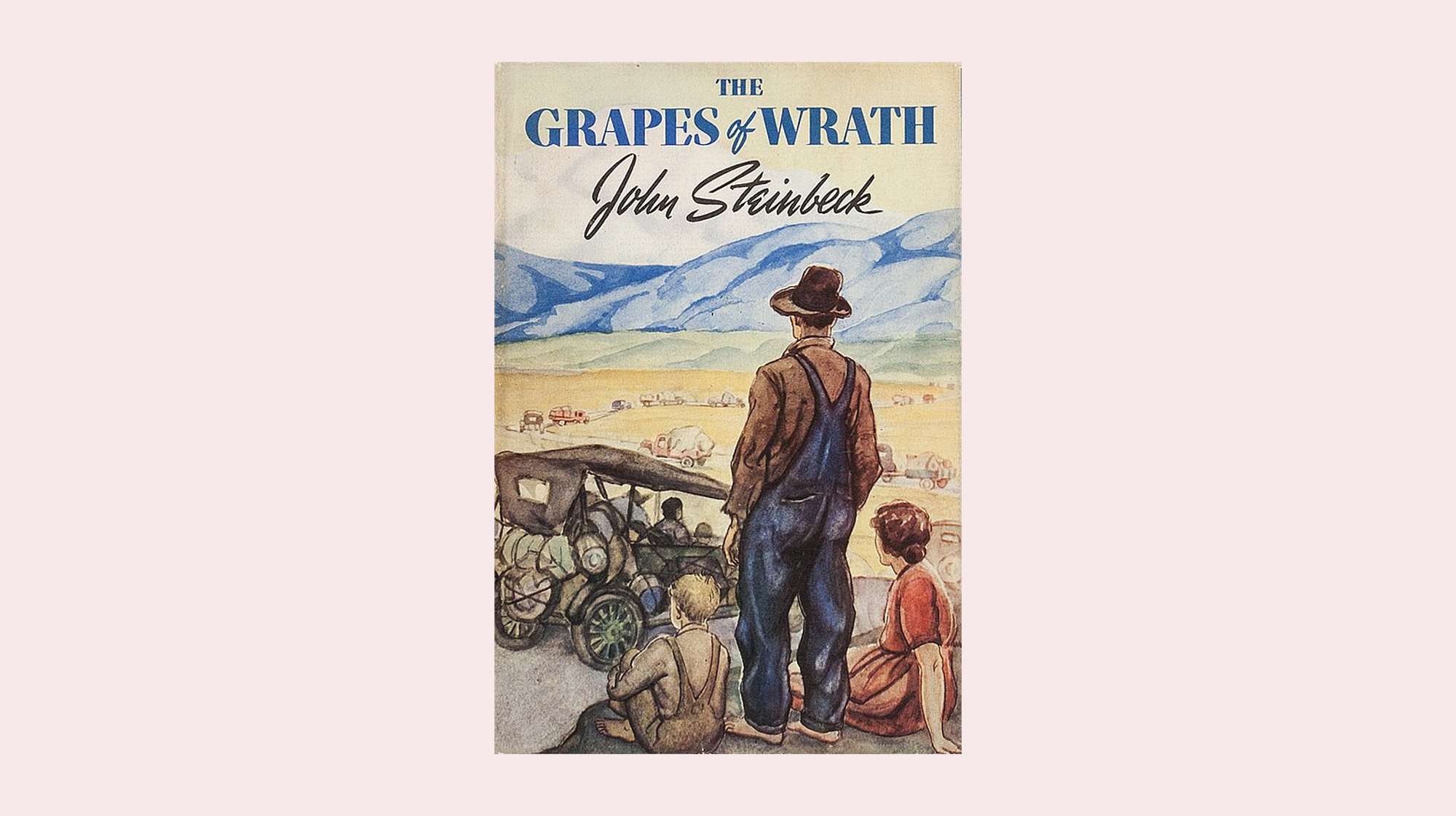

When John Steinbeck published The Grapes of Wrath in 1939, the United States was just beginning to emerge from the Great Depression. The novel, which follows the Joad family as they travel from Oklahoma to California in search of work and survival, struck a nerve with readers then—and it still resonates now.
The Joads are tenant farmers forced off their land by drought, debt, and the mechanical march of progress. Their journey west, along Route 66, is not just a physical migration—it is a human struggle for justice, dignity, and belonging. Along the way, they face the cruelty of economic systems that exploit the poor and reward the powerful, and yet they hold onto hope and each other.
Steinbeck’s language is both plainspoken and poetic. In alternating chapters, he zooms in on the Joads’ personal story and zooms out to describe the broader conditions of displaced farmers across the Dust Bowl. These intercalary chapters—at first confusing to some readers—ultimately deepen the novel’s message: the Joads are one family, but their suffering is shared by many.
At the heart of the novel is Ma Joad, a woman who refuses to let her family fall apart. Her quiet strength and moral clarity make her the emotional anchor of the story. Tom Joad, recently released from prison, evolves from a self-focused man to someone who speaks for the powerless. His closing words—“I’ll be there”—are as much a promise to his family as they are to the American people.
Some criticized Steinbeck’s novel as socialist or un-American when it was first published. But The Grapes of Wrath isn’t a political lecture—it’s a cry of compassion. It challenges readers to see the humanity in those society ignores, and it asks hard questions about fairness, greed, and the cost of survival.
In today’s world, where issues of poverty, migration, and inequality are still present, the novel feels more timely than ever. Steinbeck didn’t just tell a story; he gave voice to the voiceless. And more than 80 years later, his words still echo with power and purpose.
The Grapes of Wrath is not an easy book. It asks readers to sit with discomfort, to witness pain, and to face the hard truth that the American Dream isn’t always accessible. But in its honesty and heart, it remains one of the great novels of the 20th century—a book that teaches not just about history, but about what it means to care.