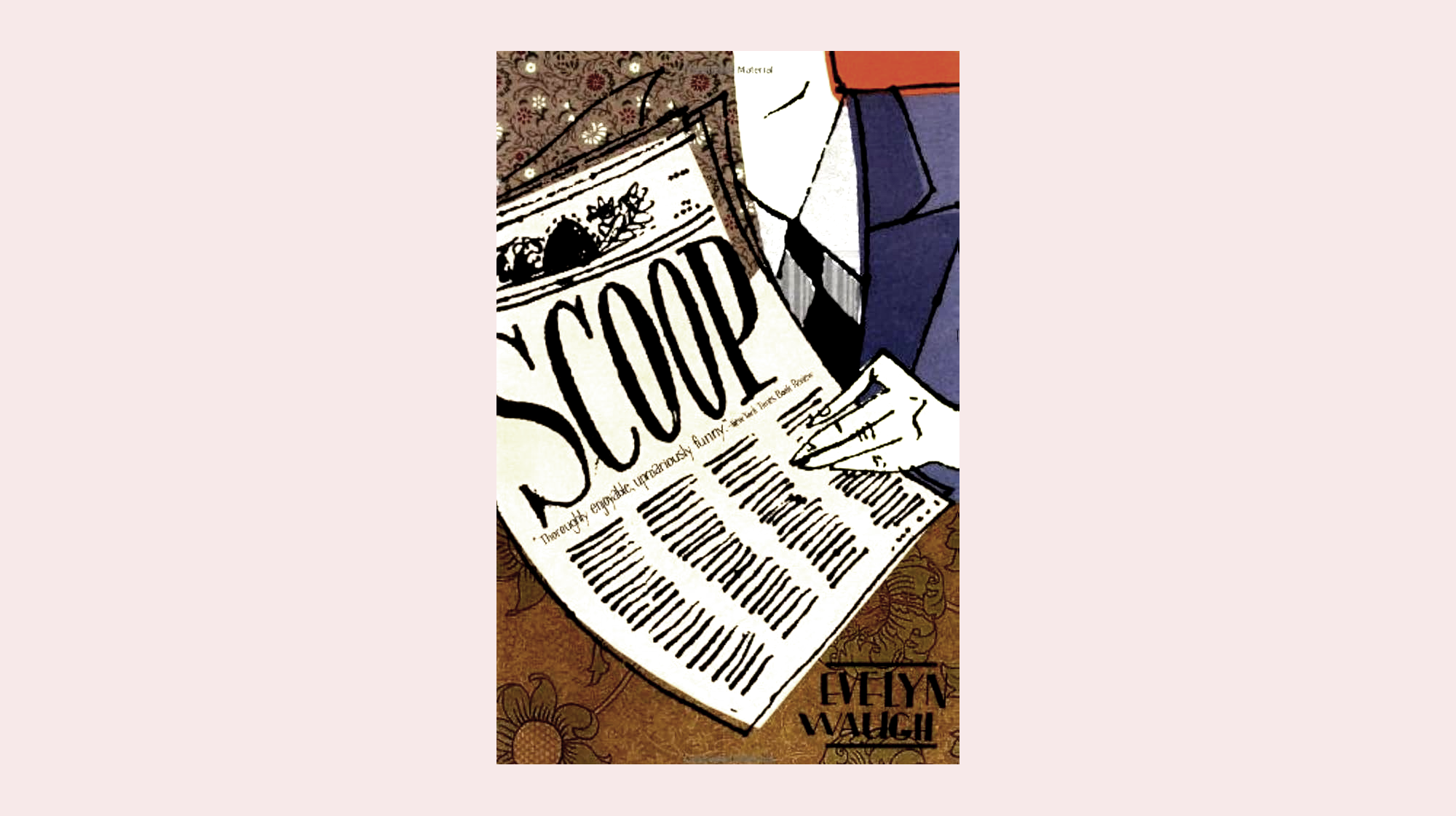

In Evelyn Waugh’s Scoop, journalism is not the noble pursuit of truth, but a circus of confusion, incompetence, and ego. First published in 1938, this sharp satire of foreign correspondence and British media remains as biting and relevant today as when it first hit the presses. In a time when misinformation spreads as fast as the news itself, Scoop is a reminder that the absurdities of media aren’t new—they’ve just gone digital.
The story begins with a simple mistake: Lord Copper, the blustering owner of a major British newspaper, sends William Boot—a shy, awkward columnist who writes about countryside animals—on assignment to cover a revolution in the fictional African nation of Ishmaelia. Mistaken for a dashing war correspondent with the same last name, Boot is plunged into a chaotic world of reporters chasing scoops that barely exist.
Waugh, himself a former journalist, draws from his experience to build a world that is both surreal and disturbingly close to reality. In Scoop, the reporters fabricate stories, rely on rumors, and desperately search for headlines in a place where little is actually happening. The foreign office, military, and media are all shown to be more concerned with image than substance, leading to moments that are as comically ridiculous as they are revealing.
Beneath the humor, however, Waugh’s satire is sharp. He skewers the class system, British colonial attitudes, and the hollow self-importance of the press. While Boot remains endearingly clueless, it is through his innocence that Waugh critiques the deeper corruption and arrogance of those who believe they are shaping history with their headlines.
Scoop may be a novel of its time, but its themes—media sensationalism, fake news, and the confusion between reality and narrative—could hardly be more modern. Waugh’s wit is timeless, and in Scoop, he delivers a warning in the form of laughter: be careful who writes the news, and be even more careful what you believe.