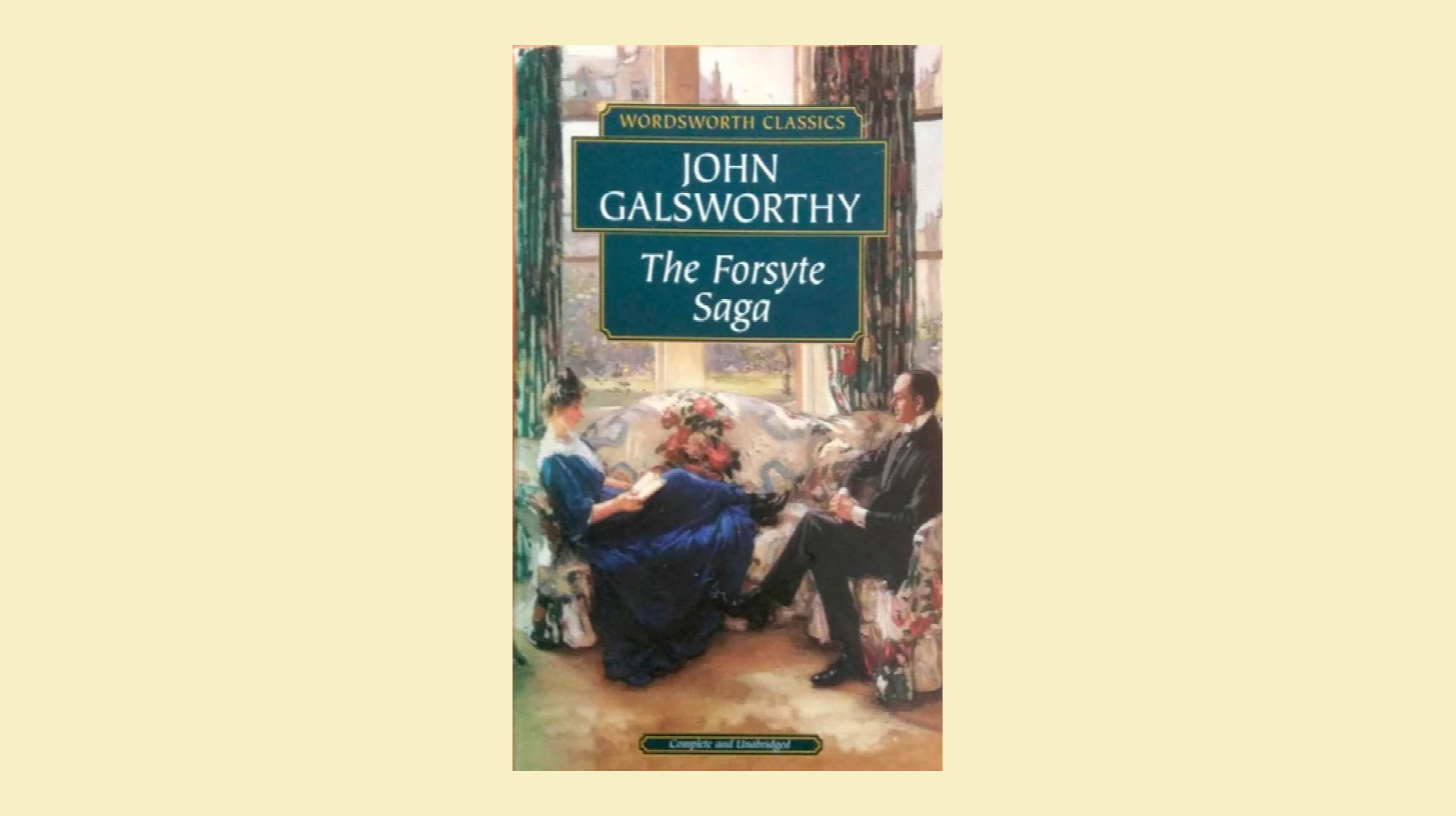

John Galsworthy’s The Forsyte Saga, published in 1922, is a sweeping family chronicle that delves deeply into the lives, loves, and conflicts of an upper-middle-class English family over several decades. The novel captures the tensions between tradition and change in early 20th-century Britain, painting a detailed portrait of a society in transition.
At the heart of the saga is the Forsyte family, whose members are driven by a mixture of ambition, pride, and a desire for social status. His possessiveness and materialism clash dramatically with the more free-spirited and emotional members of the family, sparking conflicts that expose the limits of Victorian-era values.
Galsworthy’s prose is both elegant and precise, bringing to life the social customs and class struggles of the period. Through the Forsytes’ personal dramas, the novel explores themes of love, jealousy, loyalty.
While the story can at times feel slow or overly detailed, these qualities add to the richness and realism of the narrative. Readers are invited to witness the slow unraveling of a family and society grappling with modernity.
Ultimately, The Forsyte Saga stands as a powerful examination of social change and human nature, blending the personal with the political. It remains a classic work that continues to resonate for its insight into the complexities of family life and societal expectations.