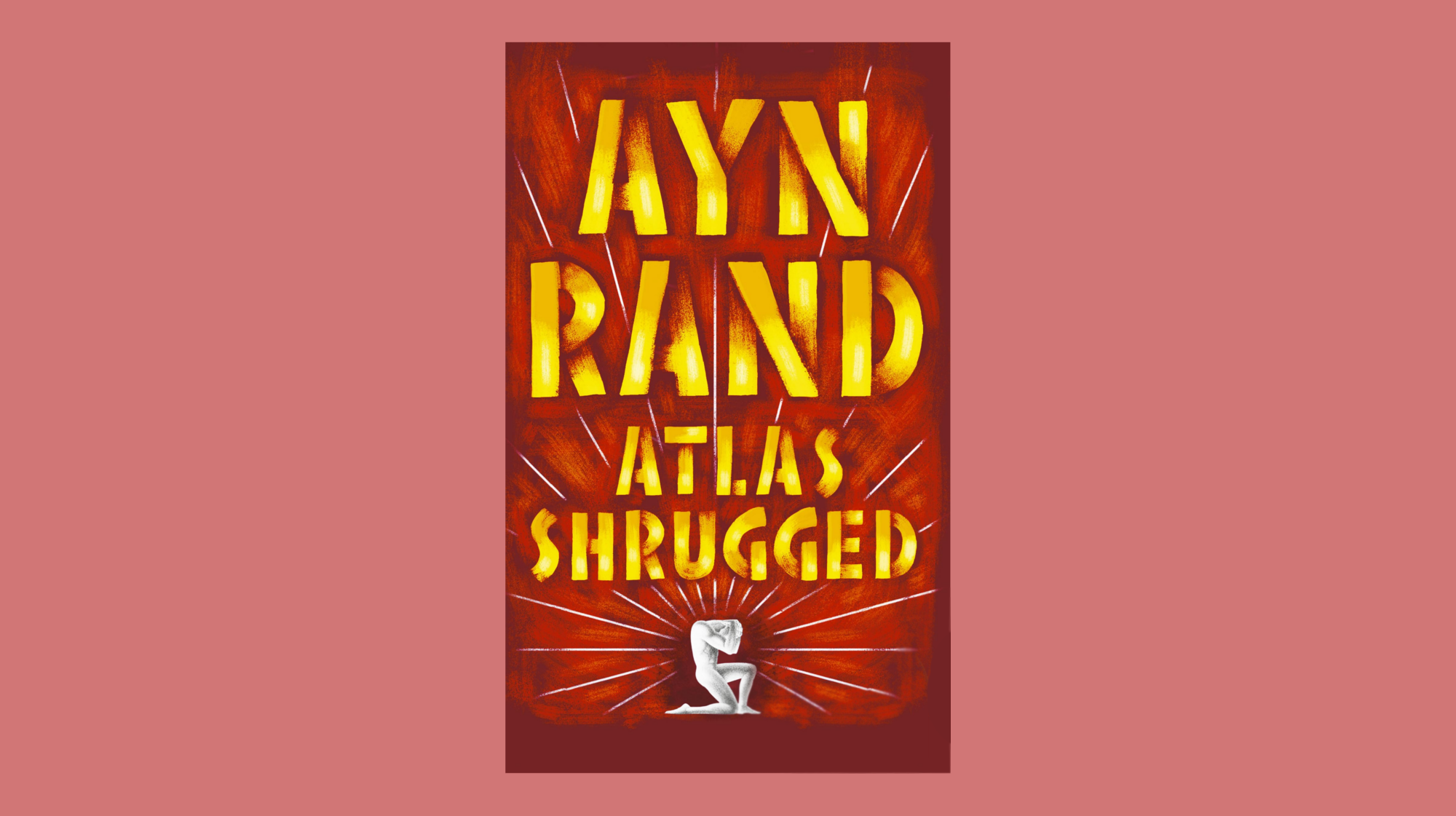

Ayn Rand’s Atlas Shrugged is a novel that doesn’t just tell a story—it makes a bold, relentless argument. At over 1,000 pages, it’s not for the faint of heart, but for readers willing to engage with its sweeping narrative and powerful ideology, it leaves a lasting impact. First published in 1957, Rand’s final and most ambitious novel imagines a world where the thinkers, builders, and creators—those she calls the “men of the mind”—begin to disappear, leaving society to fall apart under the weight of its own dependency and mediocrity.
At the center of the novel is Dagny Taggart, a railroad executive fighting to keep her company afloat in a decaying economy. Alongside her is Hank Rearden, a self-made steel magnate who believes in hard work, individual responsibility, and reason. Together, they struggle against a rising tide of government overreach, bureaucratic interference, and moral guilt. When the mysterious John Galt begins to draw away the world’s most talented individuals into hiding, the novel poses a provocative question: What happens when the people who keep the world running simply walk away?
Rand uses Atlas Shrugged not just to tell a dramatic story, but to promote her philosophy of Objectivism—the belief that rational self-interest and capitalism are moral, and that altruism and collectivism are destructive. Through long speeches, especially Galt’s nearly 60-page radio address, she lays out a vision of a society where individuals are free to pursue their own happiness without being sacrificed for others.
Critics often point out the novel’s lack of subtlety. The villains—bureaucrats, looters, and social planners—are often one-dimensional, while the heroes are idealized symbols of Rand’s beliefs. Dialogue can feel stilted, and the sheer length of the book challenges readers’ patience. Yet for all its flaws, Atlas Shrugged remains a powerful critique of socialism, government control, and the moral compromises often made in the name of “the public good.”
More than 65 years later, the novel continues to spark debate. Is Rand’s world a warning or a fantasy? Are her heroes champions of freedom, or cold idealists disconnected from real life? Agree with it or not, Atlas Shrugged is a book that demands attention, ignites discussion, and refuses to be ignored.
In the end, Ayn Rand didn’t just write a novel—she launched a manifesto in fiction form. And whether readers cheer or protest her message, the question still echoes: “Who is John Galt?”