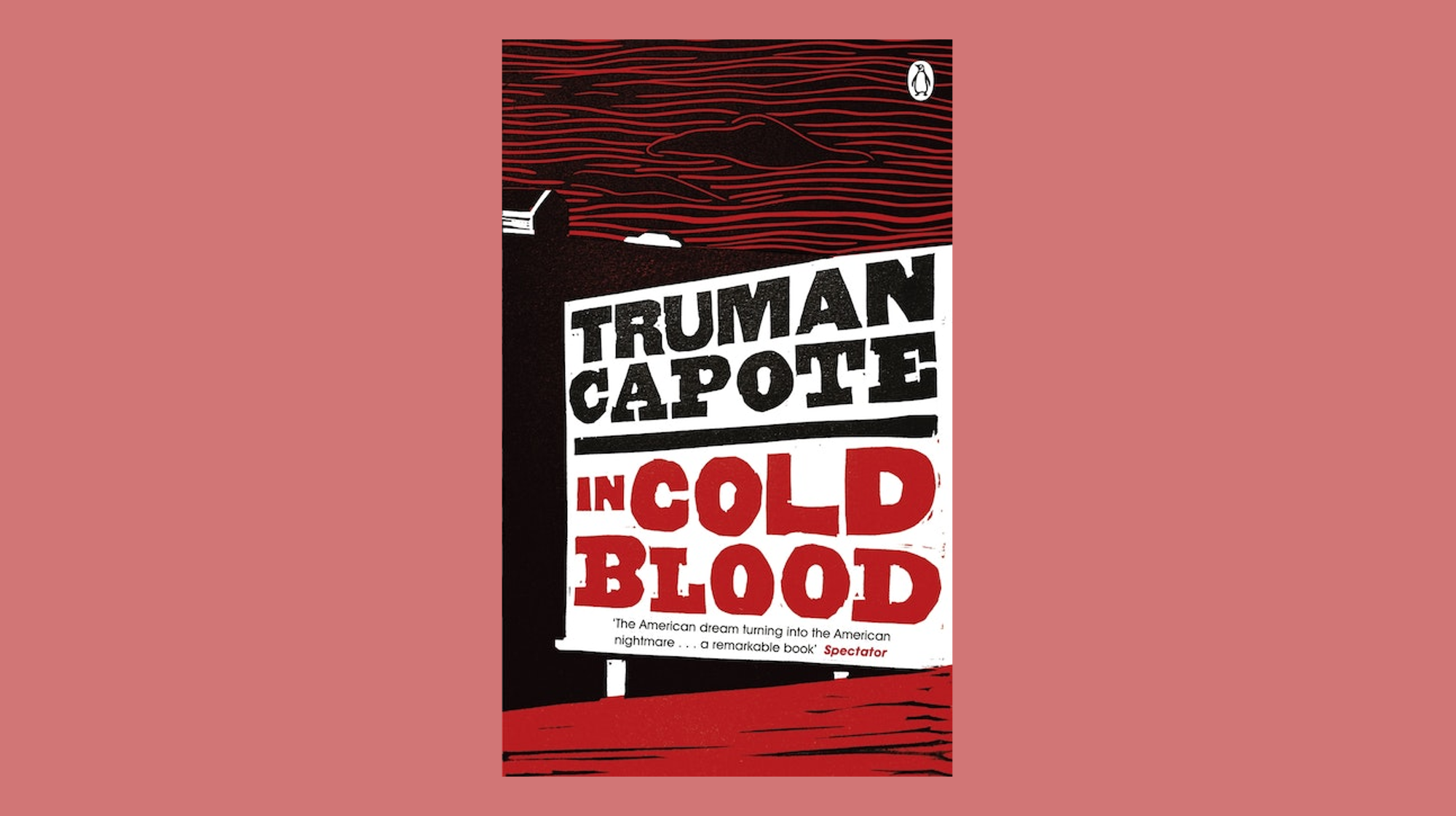

Long before true crime became a podcast industry, a Netflix category, and a late-night rabbit hole, it was a literary experiment. Truman Capote’s In Cold Blood, published in 1966, did not merely recount a brutal quadruple homicide in small-town Kansas—it redefined what nonfiction could do. In its ambition, its style, and its ethical murk, the book created a genre even as it defied it.
The facts are straightforward: In November 1959, the Clutter family—Herb, Bonnie, and their two teenage children—were bound, shot, and killed in their Holcomb, Kansas farmhouse. No apparent motive, no warning. The killers, Perry Smith and Richard Hickock, were captured weeks later and eventually hanged. But Capote was never interested in just the facts.
What he produced was something new: a “nonfiction novel,” meticulously reported yet written with the rhythms and interiority of fiction. He spent six years on it, conducting interviews, poring over court documents, and embedding himself in the community. The result is both sweeping and intimate—a kaleidoscope of perspectives that captures not only the psychology of the killers and the agony of the victims’ survivors, but the soul of a town suddenly thrust under a magnifying glass.
Capote’s prose is cool, elegant, and unnervingly precise. He writes violence not with sensationalism but with a kind of eerie reverence. There is no gore, but there is dread, and it builds slowly, insidiously. In one of the book’s most haunting choices, the murders themselves are withheld until deep into the narrative—not to protect the reader, but to make them complicit in waiting for it.
What makes In Cold Blood so singular—and so controversial—is its dance with invention. Capote claimed absolute factual accuracy, but later admitted to embellishments, reconstructed conversations, and dramatic license. The lines between journalism and storytelling blur until they disappear. This has led to decades of debate: Was it reporting? Was it art? Was it manipulation?
Whatever it was, it worked. The book not only became a bestseller—it established a template. Every moody crime docuseries, every deep-dive podcast, every literary meditation on murder owes it a debt. But few have matched its uneasy power.
Because beneath the craftsmanship lies a deeper discomfort. Capote’s fascination with Perry Smith—articulate, broken, strange—complicates the narrative. There is no clean justice, no reassuring closure. We are left instead with the unnerving suggestion that evil, like beauty, may simply be a matter of perspective.
In Cold Blood remains an unmatched achievement, not just because it told a true story, but because it exposed something truer: our hunger for understanding the inexplicable, and the price we pay when we turn tragedy into narrative. Capote gave us the genre—and the warning. We’ve been reading, watching, and listening ever since.