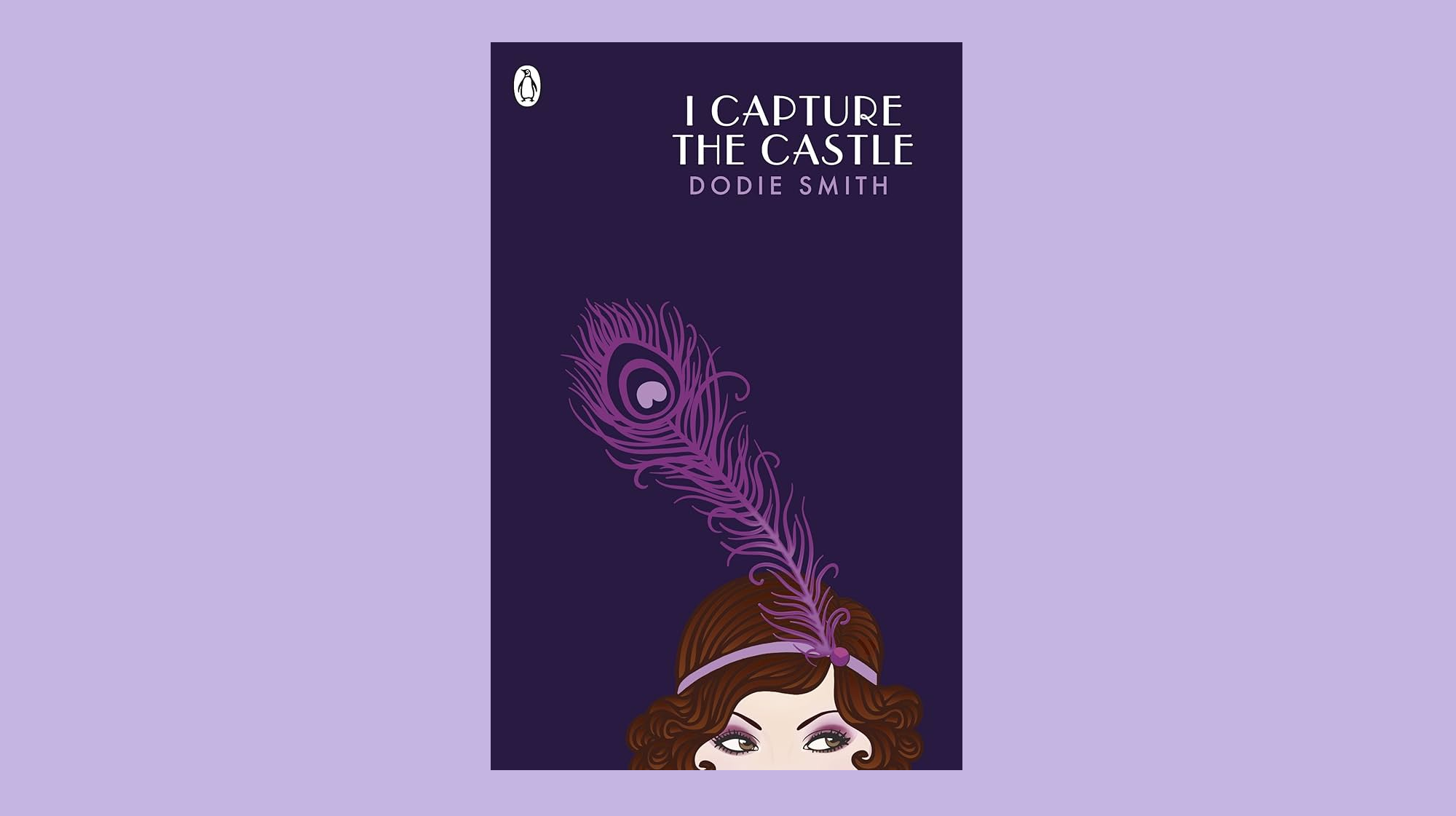

There are novels that arrive like thunderclaps, demanding to be noticed. Then there are those that tiptoe in quietly, offer you a cup of tea, and before you know it, have rearranged something deep in your heart. Dodie Smith’s I Capture the Castle, first published in 1948, is of the latter kind—a debut novel that glows not with spectacle but with rare emotional clarity.
Set in 1930s England and told through the journals of seventeen-year-old Cassandra Mortmain, the novel presents itself, at first glance, as a charming coming-of-age tale. Cassandra lives with her eccentric and impoverished family in a crumbling Suffolk castle. Her father is a once-famous novelist who now spends his days in silence; her stepmother is a bohemian nudist; her beautiful sister Rose is determined to marry rich. When two wealthy American brothers inherit the nearby estate, romance—and upheaval—follows.
But Smith’s triumph lies in what she does with this seemingly predictable setup. The story never tips into satire, nor does it surrender to sentimentality. Instead, it unfolds with aching restraint, driven by Cassandra’s voice—sharp, observant, aching to be both young and wise. She writes not only to record events, but to make sense of them, and in doing so, becomes one of literature’s most memorable narrators.
The book’s emotional power lies in its realism: first love is not returned, fantasy gives way to compromise, and growth often comes with quiet heartbreak. Smith’s postwar readers, steeped in loss and reinvention, would have recognized the necessity of Cassandra’s resilience. And today, the novel feels even more poignant in an age that prizes irony over innocence.
I Capture the Castle has long been beloved by readers, yet it still feels like a secret—passed from hand to hand, treasured quietly. Smith, better known at the time for her plays and later for The Hundred and One Dalmatians, wrote this novel in her 40s, from California exile, yearning for the damp comforts of English countryside and youth. That longing seeps through every page.
“There is only one way to capture the castle,” Cassandra writes in the first line, “and that is on paper.” She succeeds—but she captures more than the castle. She captures the moment when the world begins to change shape, when childhood ebbs and the sharper edges of adulthood begin to show. In that, Smith didn’t just write a diary-style romance. She wrote one of the loveliest novels of the 20th century.
Still waters run deep. And I Capture the Castle is a novel that proves it.