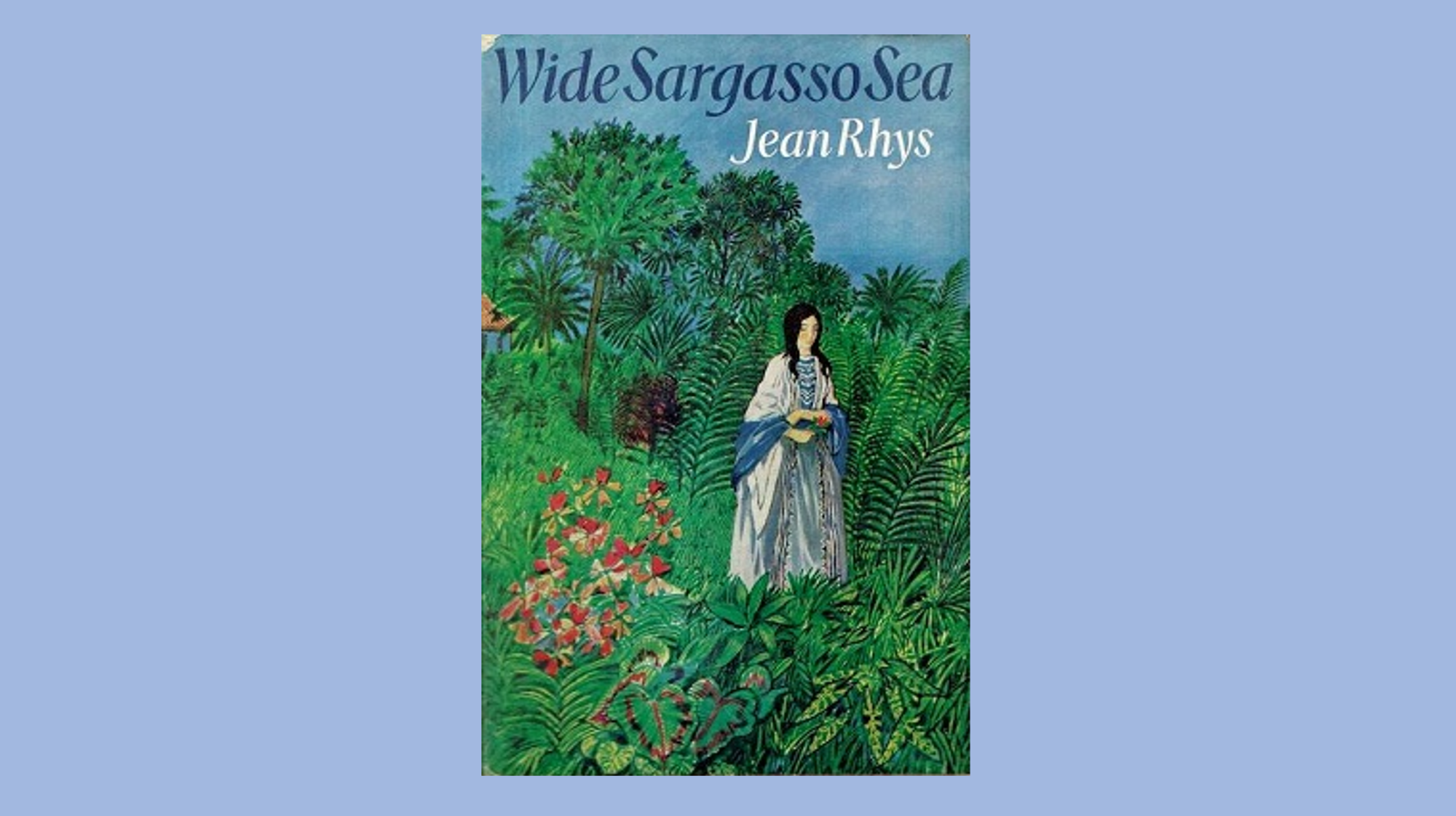

There are some books that don’t simply respond to literature—they seek to revise it, to dismantle the foundations of what came before. Jean Rhys’s Wide Sargasso Sea, published in 1966, is one such novel. Billed as a “prequel” to Charlotte Brontë’s Jane Eyre, Rhys’s novel imagines the backstory of Bertha Mason—the infamous “madwoman in the attic”—and in doing so attempts to flip the narrative on its head. But where critics see subversion, a conservative reader may reasonably see something else: a work of ideological revisionism, driven less by literary insight than by political grievance.
Rhys’s novel is lush and moody, set in the decaying Caribbean world of post-emancipation Jamaica and Dominica. Its protagonist, Antoinette Cosway, is a white Creole woman caught between cultures, rejected by her family, her homeland, and eventually her English husband, who remains nameless but is clearly Brontë’s Mr. Rochester. The marriage deteriorates into betrayal, madness, and ultimately confinement—a story that echoes Jane Eyre but demands our sympathies lie elsewhere.
For Rhys and her champions, Wide Sargasso Sea is a feminist and anti-colonial reclamation of a silenced figure. Antoinette, once a villain, is recast as a victim: of patriarchy, of imperialism, of racial and sexual politics. But the novel’s literary craft is often overshadowed by its overt ideological mission. It does not simply offer a fresh perspective; it seeks to indict the very foundations of Western literature.
And here is where the book reveals its propagandistic streak. Rhys’s portrayal of the Englishman as cold, repressive, and exploitative is more caricature than character. He is not a man but a metaphor—for colonial authority, masculine control, and English arrogance. The novel treats him not as a complex moral agent but as a cipher for oppression. This flattening of moral nuance—common in ideologically driven fiction—undermines the psychological richness that supposedly grounds the novel.
Likewise, Rhys’s treatment of race and colonial legacy simplifies more than it reveals. The narrative gestures toward the traumas of slavery and cultural dislocation, but does so from the limited perspective of a white Creole woman—a character who, though portrayed as marginalized, still occupies a position of inherited privilege. The surrounding Black characters exist mostly in shadows, defined by mysticism, rage, or silence. Rhys’s attempt to challenge colonial structures ends up replicating many of their literary hierarchies.
There is also a profound irony in Rhys’s approach. Wide Sargasso Sea depends entirely on Jane Eyre for its power. It gains its urgency by presuming to correct a perceived injustice in the canon—but in doing so, it tears down a work that offered its own progressive vision in its time. Brontë’s Jane is a heroine of integrity and moral clarity, navigating a deeply flawed world with strength and self-respect. Reframing her story as one built atop colonial erasure and patriarchal cruelty may suit the politics of the 1960s, but it distorts the literary and historical context in which Brontë wrote.
None of this is to say that Wide Sargasso Sea lacks merit. Rhys is a gifted stylist, and her evocation of place is often mesmerizing. But style alone cannot mask the book’s deeper intention: to turn literature into a vehicle for ideological critique, to rewrite tradition through the lens of resentment. For those who value the continuity of the Western canon—and who resist the impulse to deconstruct every artifact of its legacy—Wide Sargasso Sea may feel less like a necessary corrective than a cultural re-education project in disguise.
In the end, Rhys offers not just a different perspective, but a polemical one—less interested in expanding the story than in condemning it. Whether that makes for great literature or just timely politics is a question readers must answer for themselves.