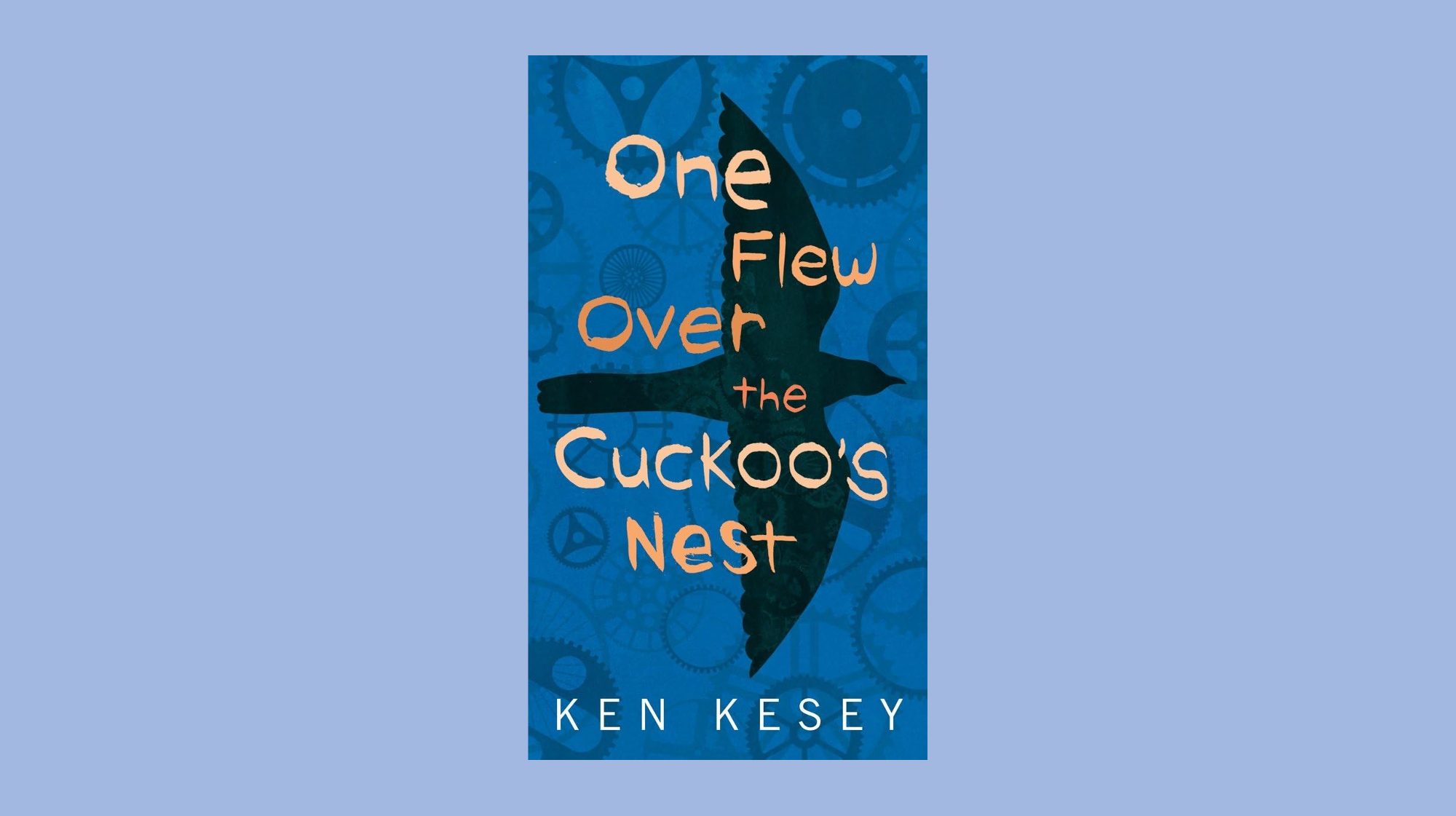

When One Flew Over the Cuckoo’s Nest was published in 1962, America was poised between buttoned-up postwar conformity and the rumblings of cultural revolt. Ken Kesey, just 27 years old and fresh from a government-sponsored drug trial, cracked the social facade wide open with this startling debut. Over six decades later, the novel still stings. It’s not just a story about a psychiatric hospital—it’s about the machinery of control and the high cost of resistance.
Set in an Oregon mental institution, Cuckoo’s Nest tells the story of Randle P. McMurphy, a swaggering, red-headed gambler and brawler who lands himself in the ward hoping to duck hard labor on a prison farm. He quickly discovers he’s traded one kind of incarceration for another. The ward is presided over by Nurse Ratched, a paragon of passive-aggressive authority, whose serene exterior masks a tyrannical obsession with order. Their ensuing power struggle becomes the novel’s central drama—and metaphor.
Narrated by Chief Bromden, a half-Native American patient who feigns deafness and muteness, the novel filters its events through a foggy lens—sometimes hallucinatory, sometimes devastatingly clear. Bromden sees the hospital not just as a building, but as an extension of what he calls “The Combine,” a society that crushes individuality in favor of compliance. His perspective turns the narrative into something more than a clash of personalities: it’s a parable of American life in the mid-20th century, filtered through psychosis, paranoia, and poetry.
McMurphy, for all his bravado and crudeness, emerges as something of a folk hero—a Dionysian force in a grey, institutional world. He encourages the other men to laugh, to speak, to want. His battles with Nurse Ratched—equal parts psychological and theatrical—are as much about spirit as survival. But Kesey does not idealize rebellion. The cost of defiance is high, and the ending, while powerful, is anything but triumphant.
Reading the novel today, one is struck by how Kesey anticipated anxieties that would erupt later in the 1960s: distrust of institutions, the criminalization of nonconformity, the blurring of sanity and social conditioning. Nurse Ratched’s ward may be a confined space, but its logic extends outward, touching classrooms, office cubicles, and even the family dinner table.
There is much in Cuckoo’s Nest that has not aged easily. The novel’s treatment of women is, at times, reductive—Nurse Ratched is less a character than an archetype, and the few other women are either sexualized or demonized. Kesey implies a philosophical stance showing women will abuse their authority if they do not live their lives to please men.
Nurse Ratched asserts control by encouraging the men to expose each other’s vulnerabilities, turning the group dynamic into one of suspicion and self-doubt. Through this, Kesey suggests that institutional power—especially when held by a figure like Ratched—can strip men of their autonomy and identity. In a pivotal conversation, McMurphy explains to Harding how Nurse Ratched manipulates the patients, using her authority to manipulate their confidence and diminish their sense of masculinity.
The book asks unsettling questions: Who decides what counts as sanity? What happens when order becomes oppression? And how much are we willing to risk to be free?
Kesey’s prose—colloquial, hallucinatory, sometimes brutal—does not offer comfort. It jolts. And Chief Bromden’s final act, equal parts mercy and liberation, continues to resonate with tragic clarity. The novel ends as it began: with the faint hope that someone, somewhere, might slip the noose of conformity and live unbound.
One Flew Over the Cuckoo’s Nest isn’t just about a mental hospital. It’s about America. And in its most disturbing passages, it still sounds like a warning.