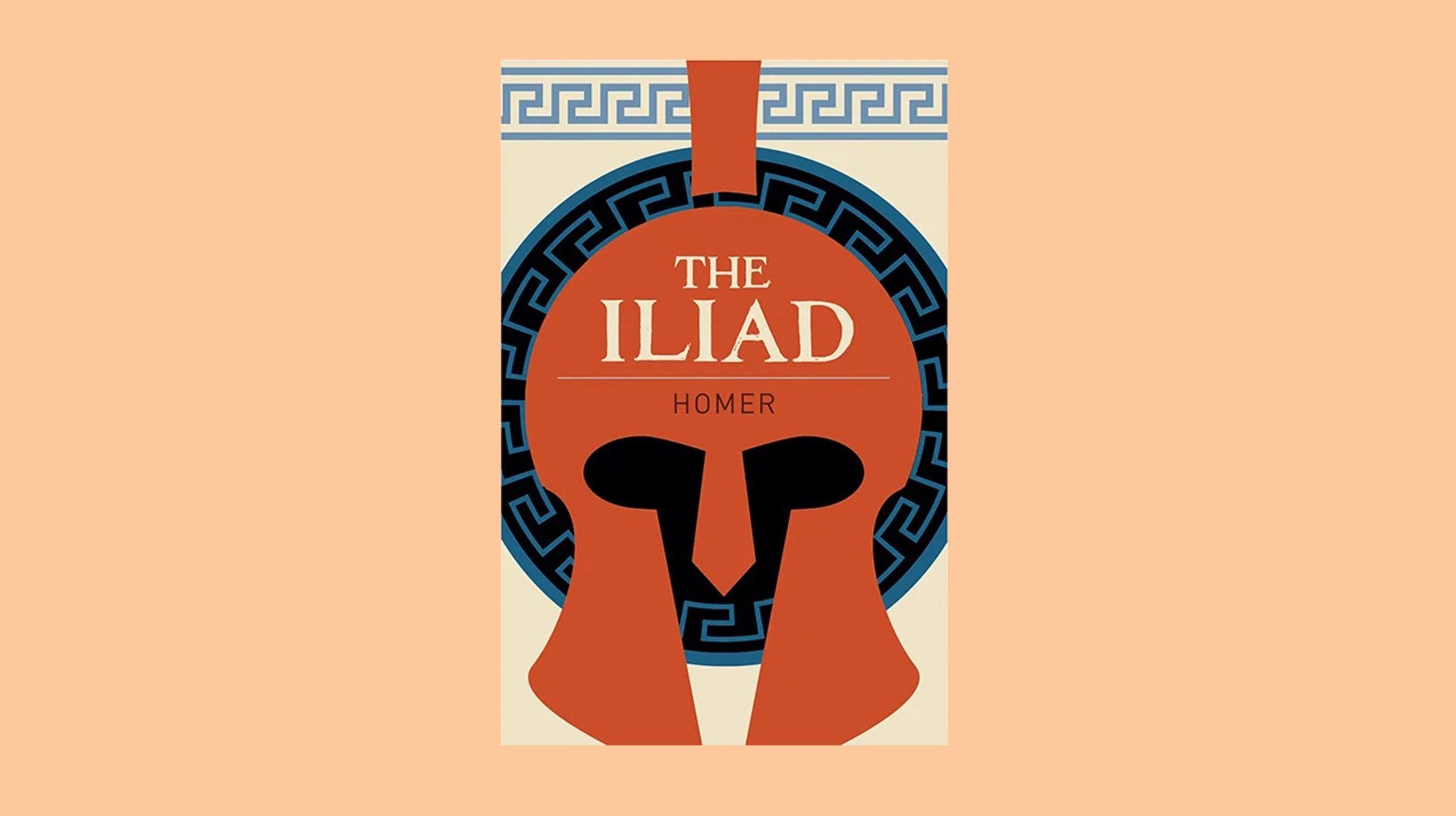

It begins not with the wooden horse, nor with Helen’s flight, nor even with the fall of Troy. It begins with rage. “Sing, goddess, the anger of Achilles…” So opens Homer’s Iliad, one of the oldest extant works in Western literature, and still among the most electrifying. Across nearly three thousand years, empires have risen and fallen, languages have withered, and civilizations have redrawn themselves again and again. But the fury of Achilles still echoes, as relevant—and unsettling—as ever.
First transcribed from the oral tradition sometime around the 8th century BCE, The Iliad resists the boundaries of modern genre. It is not simply an epic of war, though its verses are thick with the clash of spears and the thud of bodies. Nor is it just a chronicle of gods and mortals, although divine meddling animates nearly every major turn. It is a study in honor, grief, pride, and fate—a war poem that dares to ask what war costs even the most glorious victors.
At its heart is the quarrel between Achilles, greatest of the Greeks, and Agamemnon, their imperious commander. When Agamemnon seizes Achilles’ prize of honor—Briseis, a captive woman—Achilles withdraws from battle, sending the Greeks into a downward spiral and condemning his comrades to slaughter. What follows is not merely a military reckoning but a philosophical one: What is the worth of a man? Of glory? Of grief?
To read The Iliad today—especially in recent, vital translations like Caroline Alexander’s or Emily Wilson’s—is to encounter a work at once blood-soaked and deeply humane. Homer offers a panoramic view of the Trojan War, but he refuses to let us abstract it. For every sweeping charge, there is a name, a lineage, a mother who will never see her son again. Men die with poetic grandeur and pitiful detail alike. The poem does not sanitize death; it describes it with both reverence and horror. No one gets out clean—not even the gods.
What surprises modern readers, perhaps more than the carnage, is the tenderness. The quiet moments between warriors and wives, the laments of parents, the respect between enemies. In one of literature’s most moving scenes, Priam, the aged king of Troy, begs Achilles for the body of his son, Hector, whom Achilles has slain and desecrated. Achilles, still raw with the loss of his own companion, Patroclus, weeps with him. For a moment, rage yields to recognition. Two men who should be irreconcilable share a human sorrow neither war nor honor can erase.
For all its antiquity, The Iliad is startlingly modern in its psychological acuity. Achilles is not a hero in the conventional sense. He is petulant, brutal, righteous, and deeply wounded. His wrath is the engine of the poem, but so too is his grief. Homer presents a world ruled by fate and honor, but populated by men who suffer, doubt, and break under its weight.
In our own age—when warfare is mechanized and narratives are too often flattened into binaries of good and evil—The Iliad remains bracing in its moral complexity. It refuses sentimentality. It offers no triumphant endings. And yet, it compels us to look closely at what violence does to the body, to the soul, to civilization itself.
The poem ends not with victory, but with a funeral. A pause. A moment of mercy between enemies. And in that stillness lies Homer’s enduring insight: that the deepest truths of war are not found in the taking of lives, but in the recognition of their value.
The wrath of Achilles may have launched an epic. But it is the mourning of Achilles that makes The Iliad immortal.