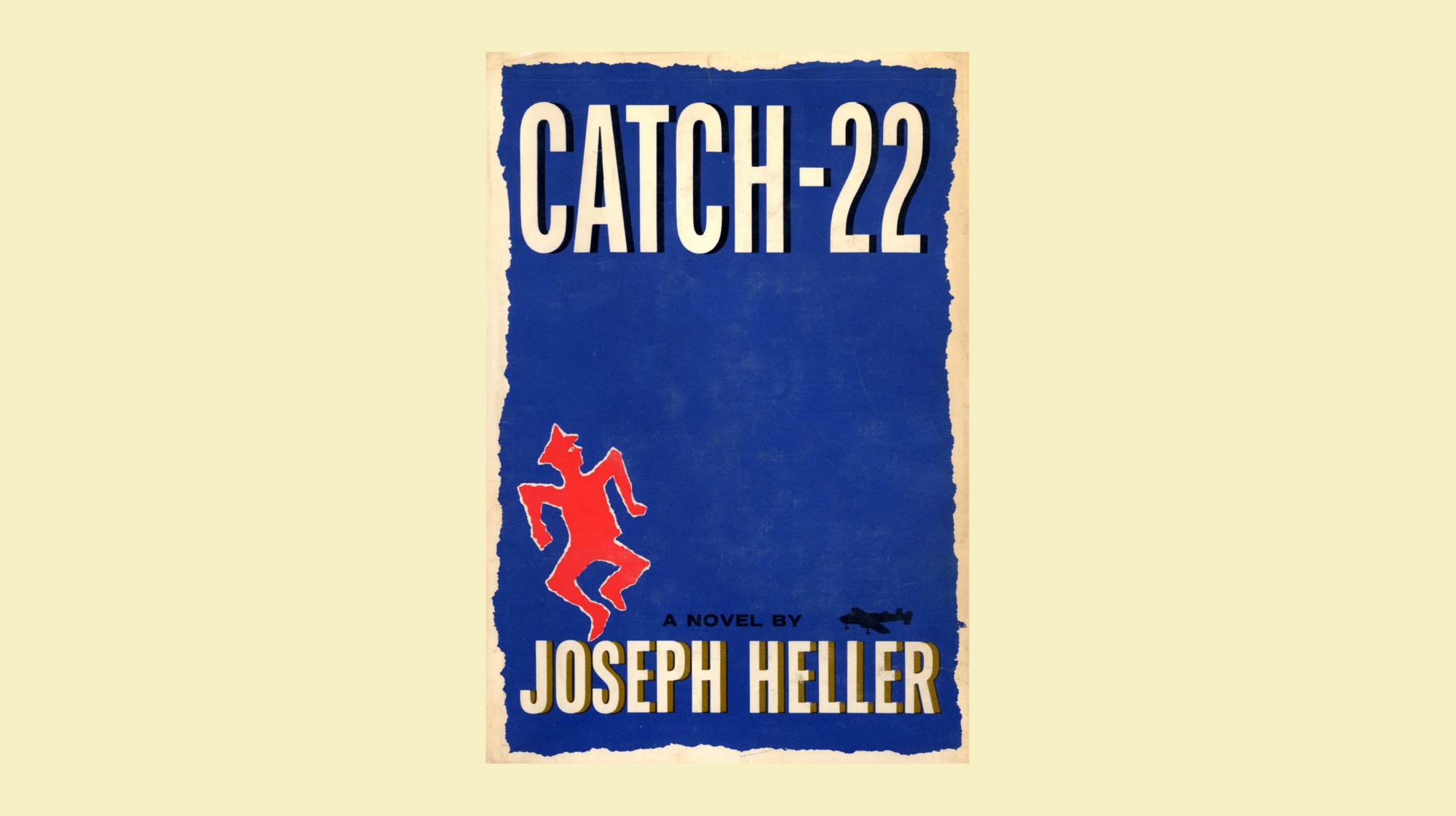

Joseph Heller’s Catch-22, published in 1961, remains a powerful and darkly comic exploration of the madness that war—and the systems that govern it—can unleash on individuals. Set during World War II, the novel follows Captain John Yossarian, a U.S. Army Air Forces bombardier desperate to survive missions while trapped in a world ruled by illogical rules and endless contradictions.
Heller’s narrative is famously nonlinear, bouncing between past and present, fact and absurdity. This style mirrors the chaos and confusion experienced by soldiers caught in a war where survival often seems impossible not because of the enemy, but because of their own command’s bureaucracy. The term “catch-22,” introduced here, has entered the English language to describe any no-win situation, underscoring the novel’s lasting cultural impact.
At its heart, Catch-22 is a satire of the dehumanizing effects of war and the absurdity of rigid institutional logic. Heller’s sharp humor exposes how bureaucratic regulations trap individuals in endless loops of frustration and fear. The characters are vividly drawn—each embodying different responses to the madness around them, from compliance to outright rebellion.
Though the novel’s tone is often darkly humorous, it does not shy away from the grim realities of war: death, fear, and moral ambiguity. Heller challenges readers to confront the illogic not only of warfare but of any system that values rules over human life.
More than six decades after its publication, Catch-22 continues to resonate as a critique of institutional power and the struggle of individuals to maintain sanity and integrity amid chaos. Its blend of biting satire and human vulnerability makes it a timeless—and necessary—read.