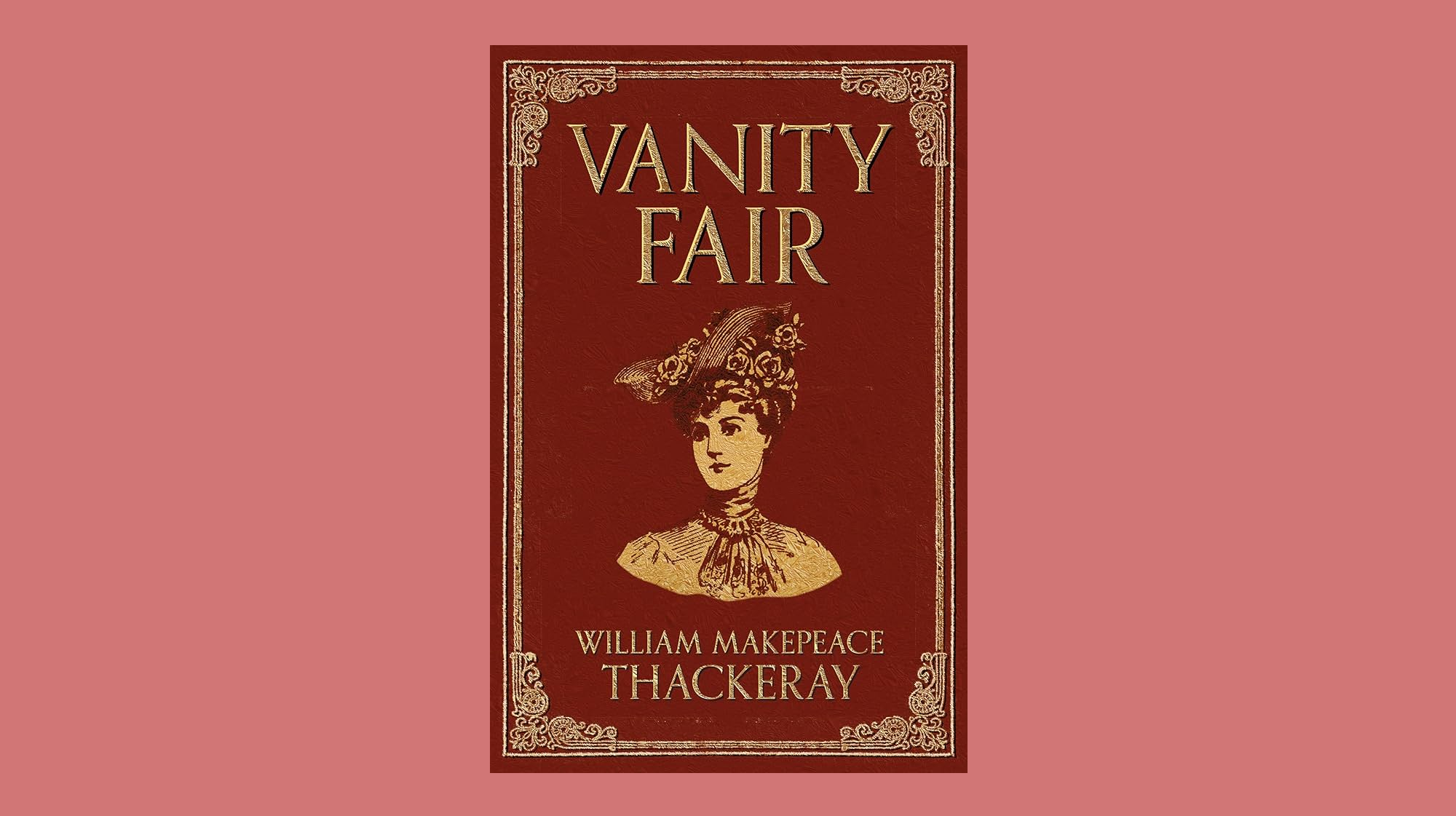

William Makepeace Thackeray’s Vanity Fair, first published in 1847, remains a biting and witty critique of early 19th-century British society. Calling itself a “novel without a hero,” it exposes the greed, hypocrisy, and social climbing that shape the lives of its characters. Though the story unfolds in the era of the Napoleonic Wars, its sharp observations about human nature and social ambition still resonate today.
The novel’s two main characters—Becky Sharp and Amelia Sedley—stand in stark contrast. Becky is clever, ambitious, and often ruthless in her pursuit of wealth and status. Amelia, by contrast, is kind-hearted but naive, embodying innocence and traditional values. Through their parallel stories, Thackeray explores the tension between self-interest and virtue, showing how society rewards cunning more than goodness.
Thackeray’s style is conversational and ironic, frequently addressing the reader directly with witty commentary. This approach keeps the novel lively, even when the plot turns dark or complicated. The author spares no one: aristocrats, merchants, soldiers, and clergy alike find themselves under his critical eye.
One of the novel’s strengths is its realistic portrayal of social mobility. Becky Sharp’s rise—from poor governess to a member of high society—is both impressive and unsettling. Thackeray does not glorify her success but rather shows the moral costs and personal sacrifices involved. In contrast, Amelia’s story reminds readers of the quiet suffering that often goes unnoticed beneath society’s glittering surface.
Vanity Fair can sometimes feel sprawling, with a large cast and many subplots. Some readers may find this overwhelming or distracting. However, the complexity mirrors the chaotic social world Thackeray wants to portray, where fortunes rise and fall unpredictably.
At its heart, the novel asks uncomfortable questions about what it means to succeed and the price we pay for ambition. Is virtue enough to protect us? Or must we learn to navigate a world ruled by vanity and self-interest? Thackeray’s answer is neither simple nor comforting.
For modern readers, Vanity Fair offers a mirror to our own times, where social media and celebrity culture often reward style over substance. Thackeray’s exploration of human weakness and societal pretense reminds us that the struggle between integrity and ambition is as old as society itself.
In sum, Vanity Fair is a rich, complex novel that challenges readers to look beyond appearances and question the values that shape our lives. Its blend of humor, social critique, and unforgettable characters secures its place as a classic—one that continues to provoke and entertain.