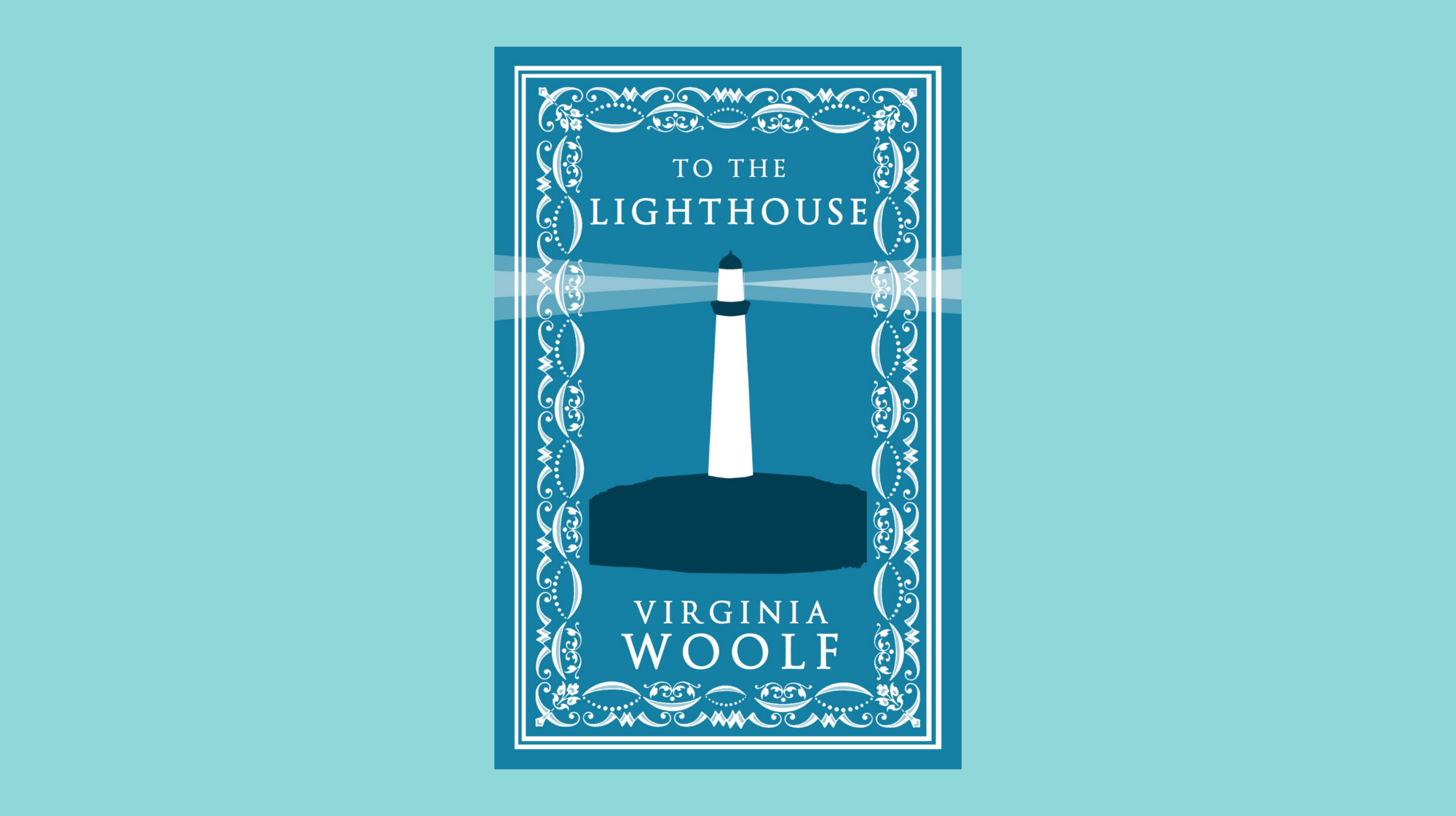

There are novels that move by plot, and there are novels that move by pulse. Virginia Woolf’s To the Lighthouse, first published in 1927, is decidedly of the latter kind—a novel that does not so much unfold as shimmer, refracting the interior lives of its characters through a lens as intimate as thought itself. Nearly a century later, it remains one of the boldest acts of literary modernism: elusive, elliptical, and quietly revelatory.
Set largely in a summer home on the Isle of Skye before and after the First World War, the novel circles around the Ramsay family and their guests, seemingly bound together by the promise—or postponement—of a trip to the lighthouse just visible across the bay. But the lighthouse is less destination than symbol, a fixed point in a world where people and time slip like water through the fingers.
Woolf’s genius lies in her ability to capture the movement of consciousness—the pauses, contradictions, and layered sensations that shape our experience of reality. The novel’s first section, “The Window,” immerses us in the nested perspectives of Mrs. Ramsay, serene and self-effacing, and her husband, Mr. Ramsay, intellectual and emotionally remote, along with a cast of houseguests whose lives are filtered through glances, gestures, and wordless intuitions. The result is a kind of symphonic interiority—voices rising and falling, converging and diverging with dreamlike rhythm.
Then, in a bravura middle section, “Time Passes,” the house is abandoned. Life—death, war, decay—happens mostly offstage, recorded in parenthetical asides. Here Woolf achieves something uncanny: she renders the passage of time not as action, but as atmosphere. The house breathes, ages, and stills. Silence becomes the most expressive character of all.
In “The Lighthouse,” the novel’s final movement, the long-delayed journey is finally made. But even this moment of arrival is tempered, indirect, elusive. The painter Lily Briscoe struggles to finish her canvas; the remaining Ramsays speak little; the past presses in. Closure, Woolf suggests, is not resolution but a kind of accommodation—a brief, shimmering alignment of self and world.
To the Lighthouse remains a triumph not of narrative momentum but of psychological precision. It is deeply philosophical without being abstract, steeped in emotion without sentimentality. Woolf was not merely breaking with Victorian conventions—she was reimagining what a novel could do, how it could hold time, consciousness, and memory like light caught on a wave.
In an age of distraction, To the Lighthouse still asks us to slow down and notice: the way grief accumulates in ordinary things, how love is often expressed in silence, and how the self is something flickering, unfinished, and utterly human.
It is a book that demands attention, not because it shouts, but because it whispers. And in that whisper, Woolf captures the grandeur of what it means to live—moment to moment, thought to thought, always just shy of the shore.