
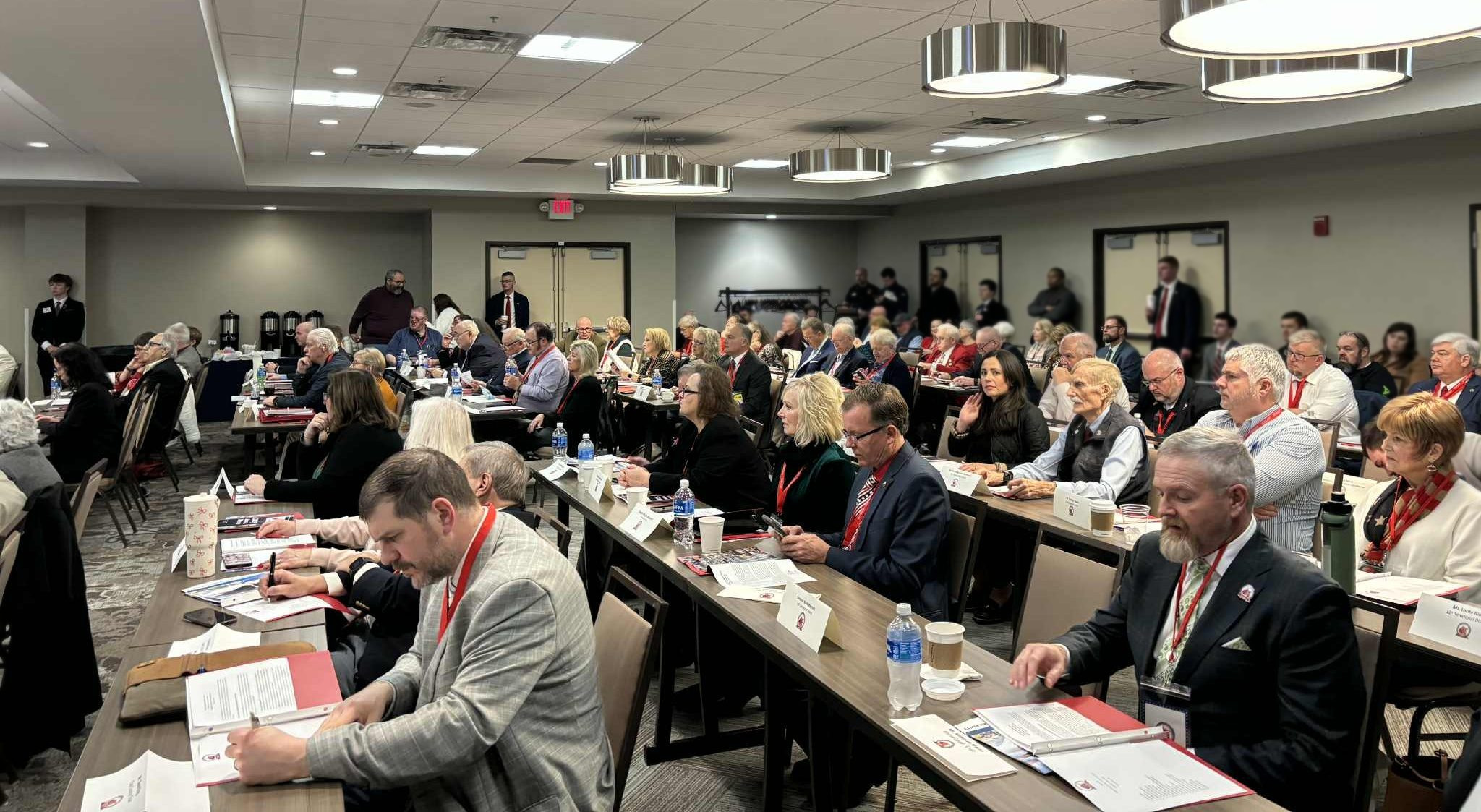
CHARLESTON — An effort to reopen West Virginia Republican primaries collapsed Saturday amid procedural challenges, heated floor debate and controversy surrounding appointments made by state GOP Chairman Josh Holstein, exposing deep ideological divisions between the base and party leadership.

The dispute unfolded during the State Executive Committee meeting on Saturday, January 10, 2026, following earlier action by the party’s resolutions committee. That committee, chaired by Wes Parry, met January 2 to consider four proposed resolutions. Two — Resolution 6 and Resolution 7 — were approved for consideration by the full body. Two others, both calling for reopening the party’s closed primary, were combined into a single proposal and rejected in committee.
“The vote was taken, and that resolution did not pass committee,” Parry said in his report to the executive committee.
While a minority of committee members attempted to force the issue to the full SEC through an amendment, Parry urged members to reject the effort in defense of the committee’s work.
The debate intensified when committee member Gary Dungan raised a point of inquiry, questioning whether the minority amendment met the party’s bylaw requirements. Under party rules, amendments to a resolutions committee report are prohibited unless one-third of the committee petitions the secretary within one hour prior to the meeting.
Holstein confirmed that an amendment had been submitted on January 7 by three committee members — Dr. Liz Balt, Nathaniel Mason and Rick Modesitt — but Dungan challenged their eligibility, noting all three had been recently appointed replacements.
According to the bylaws, when a resolutions committee member vacates their position, the state chair must appoint a replacement from the same congressional district. Dungan argued that the three appointees were all from the 2nd Congressional District, while the vacated seats belonged to members from the 1st District, rendering the appointments invalid.
Following consultation with the party’s parliamentarian, Holstein acknowledged the error.

Former state Sen. Robert Karnes then questioned whether the minority report could meet the one-third threshold even if one replacement appointment was valid.
“The reason I’m asking the question is, even if your replacement was done appropriately, that would only be one of the three people that objected or filed the minority report,” Karnes said. “And if only one legitimate member of the committee filed the minority report, that would not meet the one-third threshold.”
Dungan then objected further, arguing the three members were improperly appointed replacements and did not meet bylaw requirements.
“The bylaws also say that should any member of this committee vacate their position on this committee, the state chair shall appoint a replacement who is an executive committee member from that same congressional district,” Dungan said.
Dungan noted and reiterated that two of the vacancies were from the 1st Congressional District, while the three replacements were all from the 2nd District.
“So, they are not members of the resolution committee in good standing,” Dungan said. “And this motion is out of order.”
Holstein acknowledged the concern and consulted with the party’s parliamentarian.

“I believe in consultation with the parliamentarian it may be correct that at least one member was not properly done, and that would be my mistake,” Holstein said, later adding that the minority report would have to be dismissed.
“Okay. We would have to dispense with the secondary motion. Correct? The minority report,” Holstein said. “And again that must be an error on my fault with the appointments, and I apologize for that.”
All three appointments were confirmed to be members who supported reopening the primaries, further fueling criticism from opponents who accused party leadership of attempting to manipulate the process.
Despite the ruling, supporters of open primaries made a final attempt to reverse the party’s earlier decision. Ken Reed introduced a motion to rescind the action taken at the 2024 Winter Meeting, when the SEC voted by secret ballot to make the 2026 primary closed.
Holstein ruled that such a motion would require either a two-thirds vote of those present or a majority of the full 128-member committee. Debate was limited, and Sen. Jay Taylor (R-Taylor) moved to postpone the resolution indefinitely — a motion that would effectively stop further discussion.
After rejecting calls for a roll call vote and a secret ballot, the committee voted by voice to postpone Reed’s motion indefinitely. The “ayes” overwhelmingly outnumbered the “no” votes, prompting applause and cheers from members opposing the change.
The meeting ended in disorder as objections were shouted from the floor and Holstein briefly attempted to reopen the postponement vote he had already ruled on before backing down.
“It’s already been decided. Nothing we can do about it,” Holstein said before the committee voted to abruptly adjourn.