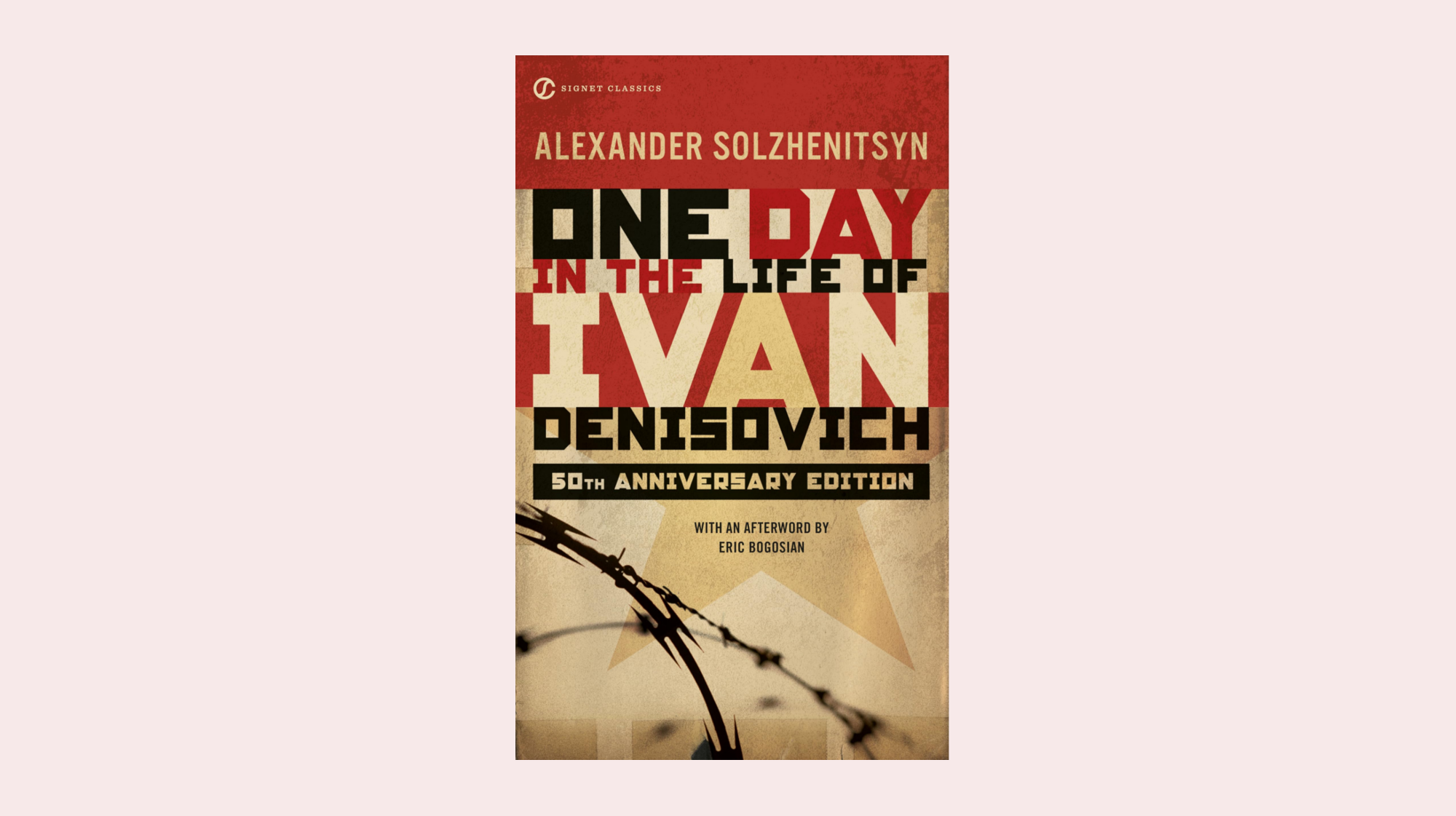

Alexander Solzhenitsyn’s One Day in the Life of Ivan Denisovich is a short novel with enormous weight. Set in a Soviet labor camp during the height of Stalinist oppression, the book follows a single day in the life of Ivan Denisovich Shukhov, a political prisoner trying to survive brutal conditions with dignity and quiet resilience. First published in 1962, during the brief cultural thaw under Nikita Khrushchev, it remains one of the most powerful indictments of totalitarianism ever written.
Solzhenitsyn himself had been imprisoned in such camps, and the realism of his prose makes this painfully clear. He doesn’t need to exaggerate—reality is harsh enough. Temperatures plunge to 20 below zero, food rations are barely edible, and human beings are reduced to numbers and labor units. Shukhov, imprisoned for merely being captured by the Germans during World War II and suspected of espionage, endures each moment with quiet thoughtfulness. He is not heroic in the traditional sense. He is simply determined to survive without losing his soul.
 Order One Day in the Life of Ivan
What makes this novel extraordinary is that, despite the bleakness, it is not hopeless. In fact, it is a meditation on endurance. Shukhov takes pride in his work, finds small joys—a warm bowl of soup, a moment of rest, a bit of respect from a fellow prisoner. In doing so, Solzhenitsyn shows us that even under crushing systems, the human spirit can endure and resist. “The belly is an ungrateful wretch,” Shukhov thinks. “It never remembers past favors, it always wants more tomorrow.”
The writing is stark but poetic, moving without sentimentality. Solzhenitsyn avoids overt politics and instead lets the conditions speak for themselves. This is not a manifesto. It is something more honest—a close look at one man’s life in the gulag, and the quiet strength it takes to live it.
In today’s world, where freedom is still threatened in many places, One Day in the Life of Ivan Denisovich feels as relevant as ever. It reminds us that tyranny is not only found in distant history books, and that resistance can take many forms—even as simple as staying true to oneself through a long, cold day.