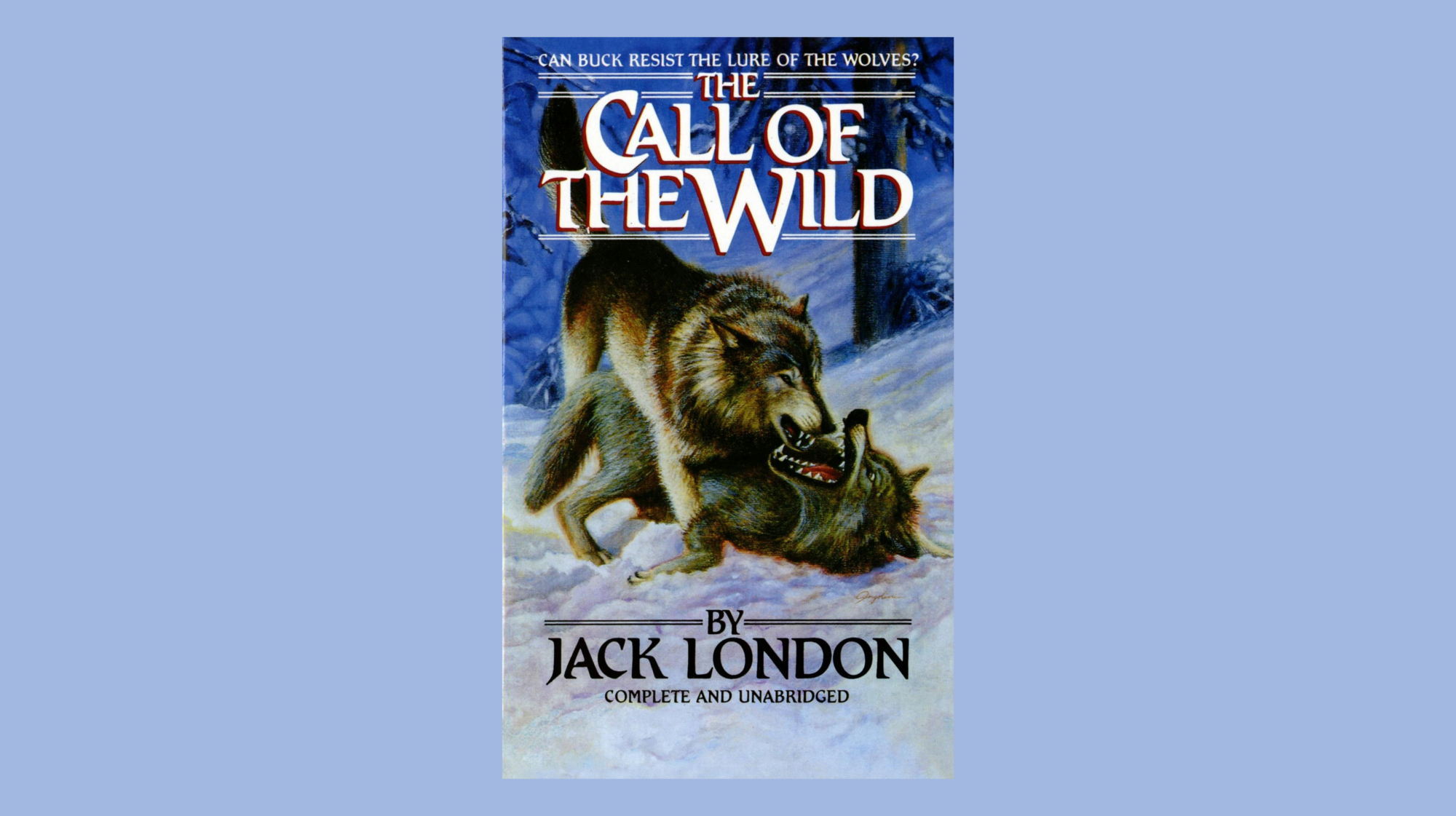

Jack London’s The Call of the Wild, first published in 1903, has the stripped-down intensity of a parable and the punch of a survival narrative. It is a story about a dog—Buck, half St. Bernard, half sheepdog—who is stolen from a genteel California estate and sold into the brutal world of Yukon sled teams during the Klondike Gold Rush. But it is also a story about transformation, about the primal self lurking beneath civilization’s leash.
The novel is brief—less than 30,000 words—but dense with fury, beauty, and blood. London’s prose is taut and muscular, infused with the philosophy of naturalism and the crackling energy of a man who had lived the world he described. (London himself had traveled to the Yukon and returned with little gold but ample literary fodder.) The writing moves with Buck’s evolution: from the rhythms of domestication to the raw pulse of instinct.
What’s most striking rereading The Call of the Wild in the 21st century is how little it has aged—and how much it still unsettles. London’s depiction of the wilderness is not romantic but red in tooth and claw. The snowy trails are painted with sweat and savagery. Buck is not a sentimental creature but a vessel of willpower and adaptability, shedding layer after layer of domesticated polish until he stands, snarling and sacred, in the primeval forest.
Yet The Call of the Wild is not a nihilistic book. Beneath its violence is a reverence for the natural order—one harsher, perhaps, but more honest than the hypocrisies of man. Buck’s journey from pet to legend is, in London’s hands, a kind of spiritual awakening. The wild is not merely a setting but a character, and its call is not only to Buck—it’s to the reader, too.
At a time when nature often appears as backdrop or battleground, London reminds us of its sovereignty. The Call of the Wild remains a brutal, exhilarating, and strangely uplifting hymn to the untamed. It is, like Buck himself, lean, proud, and never fully tamed.