
For years, Americans have been told that the deepest divide in our country runs between Republicans and Democrats. In West Virginia, we hear it constantly: red versus blue, one side right and the other wrong.
But that narrative misses a more important truth.
The real divide is increasingly between entrenched “special interests” and the grassroots citizens of both parties.
Across West Virginia, everyday people, regardless of political affiliation, are trying to make sense of rising costs, shrinking opportunities, and a system that often feels unresponsive. And while Republican and Democrat grassroot-voters may disagree on how best to solve these problems, they are motivated by the same basic goal: improving the lives of their families, neighbors, and communities.
That shared intention matters, because when politicians make promises to working-class West Virginians, and then get into power, they often prioritize policies that exclusively benefit the ‘donor class’. This is exactly what we have witnessed in West Virginia for generations.
Grassroots voices that call for meaningful change are dismissed, censored, or intimidated… not because they lack merit, but because they threaten the influence of those who benefit from keeping ordinary citizens divided and disengaged.
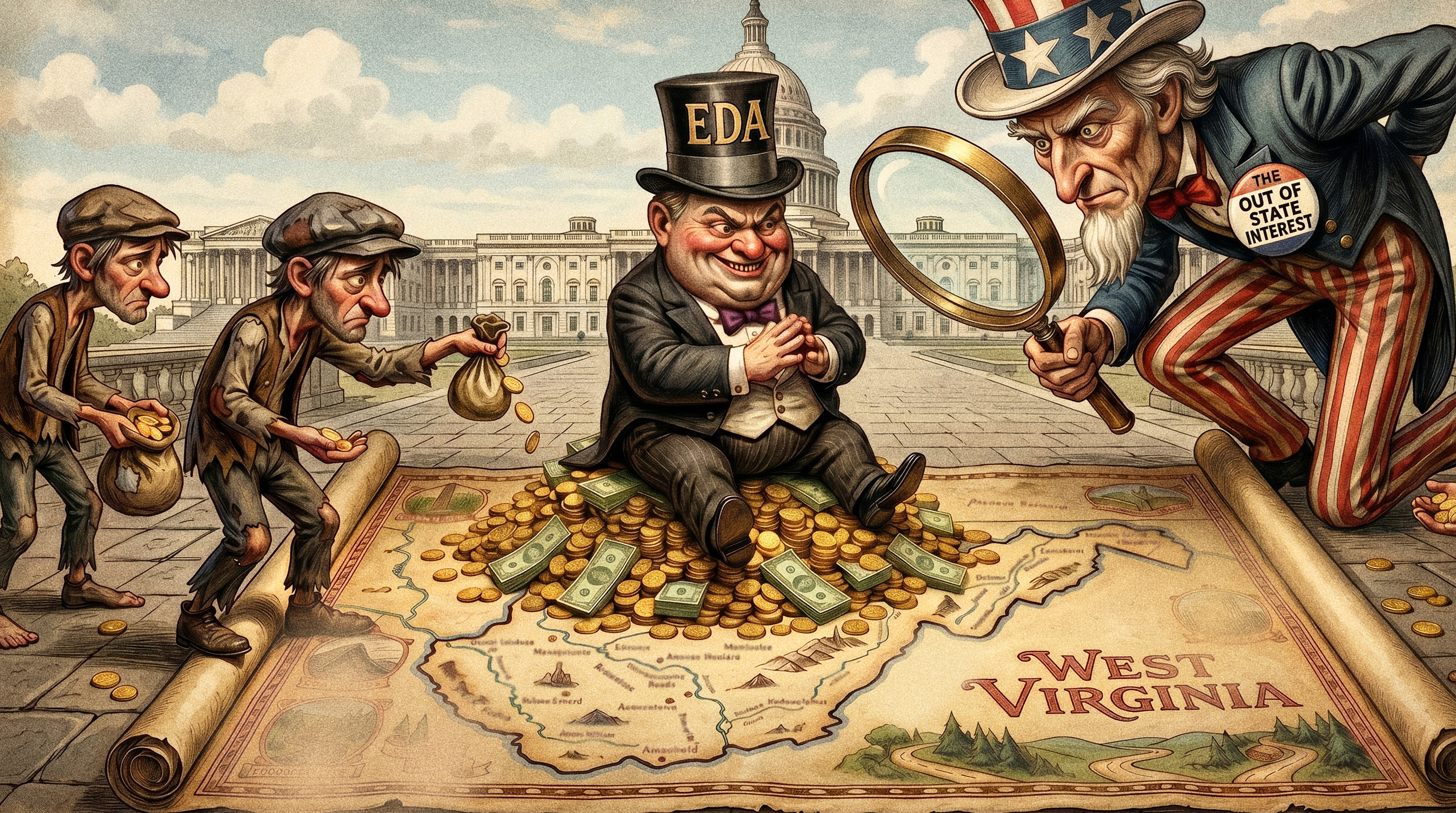
The discussion about “special interests” is not just a momentary talking point. For decades, certain in-state entities have profited handsomely by persuading our state government to funnel taxpayer dollars into ‘fantasy projects’ that too often fail to deliver on their promises while leaving the public to shoulder the cost. When those arrangements are challenged or scrutinized (as they have been more recently), the backlash is swift and coordinated.
It’s no coincidence that many of the loudest defenders of these systems come from both sides of the political aisle. While many mainstream Democrats and Republicans have supported such projects, there have also been voices within both parties who questioned their legitimacy. Those dissenting voices, often closer to the grassroots, deserve more attention. Until now, they were given none.
That’s why this moment calls for something different.
It calls for Republicans and Democrats at the grassroots level to look beyond party labels and recognize a shared interest in accountability, transparency, and responsible governance. It calls for a willingness to listen and to genuinely hear and research opposing viewpoints without immediately assuming bad faith.
Recent weeks have also brought increased attention to political spending, particularly from political action committees operating outside of West Virginia. Much of the coverage by statewide legacy media has focused on the scale of that spending and its origin, often framing it as evidence of outside influence attempting to shape in-state policy debates.
That framing, however, leaves out an important layer of context. Many of these organizations are engaging on issues that have already generated concern among grassroots voters, particularly when it comes to legislation or spending priorities that appear out of step with what constituents believe their elected officials have promised to support.
Critics have attempted to connect these outside PACs and non-profits directly to Gov. Patrick Morrisey, suggesting that the involvement of out-of-state groups reflects a broader agenda disconnected from West Virginia’s interests. But that argument assumes that geography alone determines alignment, rather than examining the substance of the issues being raised and whether the position of these groups are in alignment with what grassroot-Republican voters support. If the out-of-state groups are fighting for the same issues in Washington D.C. that West Virginia’s grassroots voters care about, obviously they do not lose credibility just because they are not in-state.
At the same time, some of the strongest opposition to the Governor has come not just from outside groups, but from known-corrupt in-state interests. In many cases, those criticisms have intensified following efforts to curb or reevaluate projects that relied heavily on public funding but produced limited to no measurable return for taxpayers. Supporters of the Governor’s efforts argue that increased scrutiny was long overdue, particularly for initiatives that carried significant financial risk without clear public benefit.
This context also helps explain why some of the most vocal critics of past failed development models have become targets of Super PACs opposing Gov. Morrisey in the 2026 Republican Primary. Lawmakers such as Sen. Laura Chapman, Sen. Jay Taylor, Sen. Mike Azinger, Sen. Mark Maynard, Sen. Rollan Roberts, and Sen. Anne Charnock have backed efforts to increase oversight and accountability in the state’s economic development initiatives, aligning with the Governor’s push for reform. Those changes are intended to shift the focus of the state’s economic agenda toward broader public benefit, rather than outcomes that primarily advantage a narrow set of interests.
That tension helps explain the current political moment within the Republican Primary. The outside organizations aligned with Governor Morrisey that are now weighing-in and connecting with West Virginia’s grassroot-Republicans are national advocates for specific conservative policy frameworks.
Their involvement is disrupting the controversial funding networks within our state that have long controlled our elections without benefit to our people.
None of this neatly fits into a single partisan narrative. Disagreements over policy direction remain, and reasonable people can differ on the Governor’s policy approaches or priorities. But the intensity of the response from most of the ‘special interests’ challenging Governor Morrisey are due to the Governor cleansing the corruption out of his own party.